
|
| Torâh | Haphtârâh | Âmar Ribi Yᵊhoshua | Mᵊnorat ha-Maor |
|---|---|---|---|

Paradigm for "Anointed Killed…" vs "Killed Messiah": DSS 4Q 285
25.12-13 – לָכֵן אֱמֹר הִנְנִי; נֹתֵן לוֹ, אֶת-בְּרִיתִי שָׁלוֹם: 13 וְהָיְתָה לּוֹ וּלְזַרְעוֹ אַחֲרָיו, בְּרִית כְּהֻנַּת עוֹלָם; תַחַת, אֲשֶׁר קִנֵּא לֵאלֹהָיו, וַיְכַפֵּר עַל-בְּנֵי-יִשְׂרָאֵל:
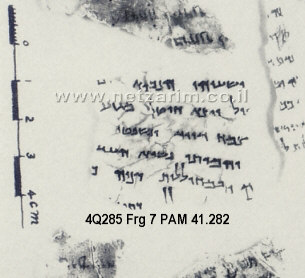 |
 Dead Sea Scroll 4Q 285, Fragment 7; PAM 41.282, Dead Sea Scroll 4Q 285, Fragment 7; PAM 41.282, |
For killing the flaunting-violators of תּוֹרָה, an eternal Kᵊhun•âhꞋ was granted to PiꞋnᵊkhâs and his descendants.
A fortiori, תּוֹרָה declares that by this killing of flaunting-violaters of תּוֹרָה, PiꞋnᵊkhâs, not an apotheosized christ man-god, provided ki•purꞋ for Bᵊn•eiꞋ-Yis•râ•eilꞋ!!!
A caveat, however, that this was done:
In the absence of such a ruling by a national Israeli Beit-Din, actions like that of Yigal Amir (Rabin's assassin) and Barukh Goldstein are vigilante murder.
While there is no national (viz., Israeli) law authorizing this severity of action today, kâ•reitꞋ for deliberate, belligerent and flaunting violation of תּוֹרָה, unless mitigated by tᵊshuv•âhꞋ, remains in force and within the prerogative of the Beit-Din.
No one is perfect. Consequently, we must all be tolerant of those who misstep—forgiving those who make tᵊshuv•âhꞋ as we wish to be forgiven. תּוֹרָה is perfectly consistent, however, that when anyone deliberately, belligerently and flauntingly violates תּוֹרָה, unless they make tᵊshuv•âhꞋ, He has no mercy on them.
Within the bounds of law and Beit-Din, zealousness in combating deliberate, belligerent and flaunting violation of תּוֹרָה is an attribute both earning great eternal reward and producing ki•purꞋ for Yis•râ•eilꞋ.
 |
 |
27.16-17 – יִפְקֹד י--ה, אֱלֹהֵי הָרוּחֹת לְכָל-בָּשָׂר; אִישׁ עַל-הָעֵדָה: 17 אֲשֶׁר-יֵצֵא לִפְנֵיהֶם, וַאֲשֶׁר יָבֹא לִפְנֵיהֶם, וַאֲשֶׁר יוֹצִיאֵם וַאֲשֶׁר יְבִיאֵם; וְלֹא תִהְיֶה עֲדַת י--ה, כַּצֹּאן אֲשֶׁר אֵין-לָהֶם רֹעֶה:
Rendered in smoother English-style order: "י--ה, אלהים of the רוחות of all בשר, will assign an איש over the עדה, who shall go forth before them and come before them, who shall take them forth and bring them back; and the עדה of י--ה shall not be like a צאן lacking a רעה."
The principle of an assigned פָּקִיד to be shepherd over the flock of י--ה—an איש (ish; man), not an apotheosized man-god!!!—is ordained here in תּוֹרָה.
This corroborates, complements and reinforces bᵊ-Mi•dᵊbarꞋ 15.39.
|
|
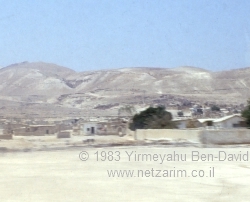
| Setting: ca. B.C.E. 1428. Location: Shit•imꞋ (31° 46' N, 35° 43' E; see map below) |
|
 |
 |
"…in the
This pâ•râsh•âhꞋ begins
25.10-11a – וַיְדַבֵּר י--ה אֶל-מֹשֶׁה לֵּאמֹּר: 11 פִּינְחָס…
The theme of "eyes" continues from last week:
27.14 – לְהַקְדִּישֵׁנִי בַמַּיִם לְעֵינֵיהֶם
In other words, MoshꞋëh had been instructed to merely speak to the rock so that it would be clear that י--ה, rather than MoshꞋëh, was the direct Provider of the water.
Clear to whom?
For their eyes—to focus their attention on the True Provider—י--ה, not MoshꞋëh.
Finally, for this pâ•râsh•âhꞋ, the focus of the eye is again consistently reinforced in 27.19: 'before the entire Eid•âhꞋ, וְצִוִּיתָה אֹתוֹ לְעֵינֵיהֶם . I.e., MoshꞋëh commissioned Yᵊho•shuꞋa Bën-Nun before the eyes of the entire Eid•âhꞋ of Israel to focus their attention on this passing of the baton to his successor.
The seven eyes of the vision of Zᵊkhar•yâhꞋ Bën-Bë•rëkh•yâhꞋ Bën-Id•oꞋ ha-Nâ•viꞋ (seven oil-lamps of the Mᵊnor•âhꞋ) were described as "his eyes." That is, the focus of the Ko•heinꞋ ha-Ja•dolꞋ must be upon תּוֹרָה and י--ה—all seven days of the week.
Moreover, as he represented Israel, "his" eyes were the eyes, the focus, of Israel. Seen in this way, the vision of Zᵊkhar•yâhꞋ is not so difficult to interpret. It is the רוּחַ הַקֹּדֶשׁ, represented by the pure olive oil, that flows through the Mᵊnor•âhꞋ, seven days, to fuel and illuminate the "eyes."
The two olive trees (see the Nᵊtzâr•imꞋ logo) represent:
the כְּהֻנָּה and
the מַלכוּת דָּוִד—the Mâ•shiꞋakh, through whom this olive oil (the רוּחַ הַקֹּדֶשׁ) flows.
These two facets also parallel and presaged the two missions of the Mâ•shiꞋakh:
First as the Mâ•shiꞋakh Bën-Yo•seiphꞋ and then, having been charged with the Kᵊhun•âhꞋ in the heavens (vacant and commemorated only informally since the destruction of the genealogical records by the Romans) and
the heavenly RibꞋi Yᵊho•shuꞋa ha-Ko•heinꞋ ha-Ja•dolꞋ, also described by Zᵊkhar•yâhꞋ (përꞋëq 3).
Notice that Yᵊho•shuꞋa of Zᵊkhar•yâhꞋ 3.7 et al., like the eternal Messianic King of the House of Dâ•widꞋ, cannot be a mere mortal Ko•heinꞋ ha-Ja•dolꞋ. Thus, the vision couldn't have featured the contemporary Yᵊho•shuꞋa Bën-Yᵊhotzâdâq ha-Ko•heinꞋ ha-Ja•dolꞋ.
Neither, of course, can he be divine. Rather, this is what the revivified person described, inter alia, in the A•mid•âhꞋ will be in עולם הבא.
 |
 Gem with 7 eyes (facets) Gem with 7 eyes (facets) |
How coincidental that the vision featuring Yᵊho•shuꞋa as the צֶמַח (3.8—widely accepted for centuries in Judaism as alluding to the Mâ•shiꞋakh) yanks us right back to the theme of one stone with seven eyes (3.9)!
| |
| Nᵊtzâr•imꞋ logo Zᵊkhar•yâhꞋ 4 |
Since we know from the other vision of Zᵊkhar•yâhꞋ that the seven eyes derive from the single Mᵊnor•âhꞋ, it's clear that the "one stone" in this vision (see also Tᵊhil•imꞋ 118.22) equates to the Mᵊnor•âhꞋ in the other vision.
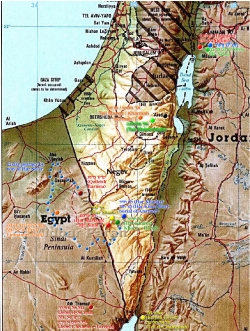 |
 Map Israel-Sinai-NëgꞋëv, showing Shit•imꞋ, across the Yar•deinꞋ from Yᵊrikh•oꞋ Map Israel-Sinai-NëgꞋëv, showing Shit•imꞋ, across the Yar•deinꞋ from Yᵊrikh•oꞋ |
In the other vision of Zᵊkhar•yâhꞋ, there were two olive trees (representing Kᵊhun•âhꞋ and Malkhut Dâ•widꞋ) as partner sources of the olive oil supplied to the "seven eyes." In this vision, we see that "one stone" has become the only source for the olive oil supplied to the "seven eyes". The meaning of the "seven eyes" doesn't change. It always refers to the same focus of
|
|
 300x198.jpg "Timna Park, Israeli Negev, area of copper mines") |
| Timna Park in the Israeli Nëgëv near Eil•atꞋ and the Gulf of Eil•atꞋ, area of copper mines carved into the sandstone faces. Contrary to outdated archeologists, radio-carbon dating has shown that this copper mine was operated in the time of, and probably in the employ of, |
In last week's pâ•râsh•âhꞋ (25.7-8), PiꞋnᵊkhâs killed a Jew who was coupling with a shi•qᵊtzâhꞋ from the tribes who bordered on the southeast, between Yâm ha-MëlꞋakh and the gulf known today as the Gulf of Eil•atꞋ (the Mi•dᵊyân•imꞋ, who ranged from this, their northwestern border, down into the northwestern parts of modern Saudi Arabia). In this week's pâ•râsh•âhꞋ (25.13), י--ה says of PiꞋnᵊkhâs' killing of Zi•mᵊr•iꞋ Bën-Sâ•luꞋ, וַיְכַפֵּר for
At first glance, one might conclude that PiꞋnᵊkhâs' act of killing Zi•mᵊr•iꞋ constituted a dâm-qor•bânꞋ ki•purꞋ.
One has to be very careful about ascribing a cause-effect relationship between two sequential events—the anathema of every legitimate scientist. A lot of anecdotal "healings," for example, have as their basis nothing more than sequential coincidence. A Christian prays for healing from cancer and the next examination is free of cancer. The Christian prayer caused a healing? If so, does the identical anecdote of the Hindu, the Buddhist and the Satanist prove their prayers, meditations, rituals, etc. are equally effective? When millions more Christians pray to be healed from cancer and are not, doesn't that contradict that Christian prayers heal cancer and there must be another cause at work? How many Christians feel rejected because their prayers go unheeded? (For antidote, see Mi•shᵊl•eiꞋ Shᵊlom•oh′ 28.9.)
I was recently given a coffee mug that plays a melody in phone-like tones whenever the cup is picked up. It works on the principle of a light-sensitive solar power cell embedded in the base. When the cup is picked up, light penetrates through the base enough to power a tiny electronic music box also embedded in the base. Turn off the light source (usually by setting the cup down on its base—or drinking in the dark) and the music stops.
Activated repeatedly, the phone-like tones quickly get on one's nerves. But one cannot drink from the cup without activating the tones. A friend of Karen's had a similar cup and the incessant tune so annoyed her that she finally broke the cup. However, I really liked my cup if I could just get rid of the infernal tones. In jest, I concentrated on stopping the music by force of mental telepathy, and when I picked up the cup and drank, the music no longer played. It had stopped permanently. One must conclude that I stopped the coffee mug from playing music by force of my mental telepathy?!?
(Should I mention that I'd picked the cup up from inside our microwave in which I'd just warmed my coffee, or that microwaves are very destructive to tiny electronic devices?)
Much of this is rather like the adage that brushing one's teeth keeps rhinoceroses out of the kitchen. Do you brush your teeth? Have you ever had a rhinoceros in your kitchen? Q.E.D.
Likewise, in this week's pâ•râsh•âhꞋ, we shouldn't assume that PiꞋnᵊkhâs' killing of Zi•mᵊr•iꞋ equates to the subsequent (not necessarily consequent) ki•purꞋ.
|
| Approx. location of (Mount) פְּעוֹר – east of |
Beginning in pâ•suqꞋ 25.11, הָעָם—not just Zi•mᵊr•iꞋ—began to engage in salacity with the women of
In direct answer to all of these references to Yi•sᵊr•â•eilꞋ collectively—rather than Zi•mᵊr•iꞋ individually—pâ•suqꞋ 11 explains that:
PiꞋnᵊkhâs' act of killing Zi•mᵊr•iꞋ (in obedience to the explicit command of י--ה, not personal inspiration, by the way) caused י--ה to withdraw His hot fury from Yi•sᵊr•â•eilꞋ, not merely as a ki•purꞋ for Zi•mᵊr•iꞋ alone; and that
PiꞋnᵊkhâs' act of killing Zi•mᵊr•iꞋ was the reason that י--ה stated (pâ•suqꞋ 11) וְלֹא כִלִּיתִי
The collective ki•purꞋ for Yi•sᵊr•â•eilꞋ, in contrast with Zi•mᵊr•iꞋ only, while somehow related to PiꞋnᵊkhâs' act of killing Zi•mᵊr•iꞋ, cannot be attributed only to PiꞋnᵊkhâs' act of killing Zi•mᵊr•iꞋ.
Would י--ה have withdrawn His hot fury against a large segment of god atones for Christians while they continue to do whatever they want. But this is not the Way of תּוֹרָה.
The suggestion is implicit: as a result of PiꞋnᵊkhâs' killing of Zi•mᵊr•iꞋ and the
PiꞋnᵊkhâs' killing of Zi•mᵊr•iꞋ was only the trigger that led to tᵊshuv•âhꞋ en masse. However, it was tᵊshuv•âhꞋ that was the ki•purꞋ for
 |
| Nubian goat, buck kid |
This parallel can be seen in the animal sacrificial system as well. It wasn't the killing of the animal that brought ki•purꞋ. It was seeing the lifeblood drain from the innocent victim (and, no doubt, in a society in which personal wealth was measured by one's flock, watching a significant portion of one's personal wealth go with it) that triggered tᵊshuv•âhꞋ—and the resulting tᵊshuv•âhꞋ made ki•purꞋ. This can be demonstrated: without tᵊshuv•âhꞋ, the qor•bânꞋ was rejected, and provided no ki•purꞋ. Conversely, some sacrifices that weren't dâm qor•bân•otꞋ at all nevertheless provided ki•purꞋ. The same principle must hold true for the provision of the Mâ•shiꞋakh: It is tᵊshuv•âhꞋ, not belief in an apotheosized man-god, that yields ki•purꞋ.
It remains as true today: tᵊshuv•âhꞋ equates to ki•purꞋ. י--ה has always preferred obedience rather than qor•bânꞋ, and without the former, the latter is worse than meaningless—it is obscene. The various instruments / vehicles leading to ki•purꞋ were all "triggers" leading to / causing tᵊshuv•âhꞋ, that produced ki•purꞋ, and without tᵊshuv•âhꞋ—evidenced by khësꞋëd, qor•bân•otꞋ were meaningless; they were not accepted and provided no ki•purꞋ (Ho•sheiꞋa 6.6 and The Nᵊtzârim Reconstruction of Hebrew Matitᵊyâhu (NHM, in English) 3.9-10; 7.15-23).
|
|
 |
|
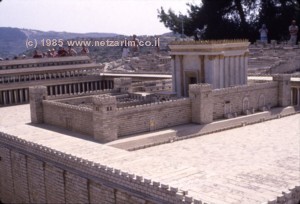
The key to understanding the weekly liturgy in the Beit ha-KᵊnësꞋët is to understand the underlying liturgy of the Beit ha-
The services in the Beit ha-
28:1-8— describes (pâ•suqꞋ 6) the
עֹלַת תָּמִיד; הָעֲשֻׂיָה בְּהַר סִינַי
With the destruction of the Beit ha-
Today, Ultra-Orthodox
The Nᵊtzâr•imꞋ believe that the combination mechanism of
Instead of the תּוֹרָה operation of tᵊshuv•âhꞋ for Zeus, an idol that, ignorant of its origins, they renamed "Jesus" and believe in to give them "salvation."
By contrast, תּוֹרָה teaches that it is the operation of tᵊshuv•âhꞋ–in practice, not any symbolic mechanism, ritual or belief, that produces ki•purꞋ. In תּוֹרָה, the symbolic mechanism is, primarily, the instrument that motivates tᵊshuv•âhꞋ. It is tᵊshuv•âhꞋ that brings our conduct into closer compatibility with תּוֹרָה and, accordingly, pleases י--ה
With the demise of the Beit ha-
In bᵊ-Mi•dᵊbarꞋ 28.9-10 we find that, in addition to every day's עֹלַת תָּמִיד, on Shab•âtꞋ and Khag there was an עֹלַת מוּסָף. This is why there is a מוּסָף service every שַׁבָּת and Khag —commemorating the עֹלַת מוּסָף.
When these two passages are recited in the respective services, Nᵊtzâr•imꞋ should keep in mind that י--ה provides "the real thing"—the primary motivator to tᵊshuv•âhꞋ—in the non-dimensional spiritual Realm as described by
Many non-תּוֹרָה people (whether calling themselves "secular Jews" or gentiles), are unaware that תּוֹרָה Jews pray acknowledging the promised resurrection twice (in each recitation of the עֲמִידָה) in every שַׁחֲרִית and another two times again in every מוּסָף service (
וְנֶאֱמָן אַתָּה לְהַחֲיוֹת מֵתִים. בָּרוּךְ אַתָּה י--ה מְחַיֶּה הַמֵּתִים:
Belief that י--ה enlivened, or "resurrected", RibꞋi Yᵊho•shuꞋa as the 27.50-54) doesn't conflict with Ha•lâkh•âhꞋ. It's belief in, or reliance upon, a Jesus, is the fabricated syncretism of an idol. י--ה, not His
Belief that י--ה couldn't have enlivened RibꞋi Yᵊho•shuꞋa is a contradiction—and aveir•âhꞋ—of תּוֹרָה!
|
|
In this week's pâ•râsh•âhꞋ, the Kᵊhun•âhꞋ is awarded to the family of PiꞋnᵊkhâs for his קִנְאָה against assimilation / absorption into the Mid•yân•imꞋ.
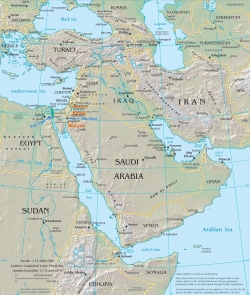 |
 Mi•dᵊbarꞋ Pâ•rânꞋ, Mo•âvꞋ, Ë•domꞋ and Mi•dᵊyân′ Mi•dᵊbarꞋ Pâ•rânꞋ, Mo•âvꞋ, Ë•domꞋ and Mi•dᵊyân′ |
 300x225.jpg "Israeli Negev, Midbar Paran") |
| Israeli NëgꞋ ëv, southeastern fringe of מִדבָּר פָּארָן near Ei•latꞋ and the Gulf of Ei•latꞋ . This vicinity, near Timna, was the northwestern boundary of the Mi•dᵊyân•im′, whose area stretched into what is today western Saudi Arabia along the eastern coast of the Arabian Gulf. (photo by Mark A. Wilson, Wooster.com) |
At the end of the previous pâ•râsh•âhꞋ, the Israelis were assimilating, intermarrying (via fornication) with the women from the tribes who bordered on the southeast, between Yâm ha-MëlꞋakh and the gulf known today as the Gulf of Eil•atꞋ (the Mi•dᵊyân•imꞋ, who ranged from this, their northwestern border, down into the northwestern parts of modern Saudi Arabia).
One Israeli man blatantly brought a Mi•dᵊyân•itꞋ woman into the camp and blatantly took her into his tent explicitly for sex. By implication of the name, פְּעוֹר, this was clearly an act of idolatrous "sacred marriage" with a leading Mi•dᵊyân•itꞋ temple consort ("high society" VIP in their ancient culture, not disdained) of בַּעַל פְּעוֹר. Enraged with the קִנְאָה of י--ה, PiꞋnᵊkhâs rushed into the tent and thrust his spear through the mating couple. For this, PiꞋnᵊkhâs, and his descendants, are here awarded the exclusive Kᵊhun•âhꞋ.
The attempt by the Mi•dᵊyân•imꞋ to entice Yi•sᵊr•â•eilꞋ to assimilate was the דְּבַר פְּעוֹר, bᵊ-Mi•dᵊbarꞋ 25.18). The passage hints that this was a deliberate Mi•dᵊyân•imꞋ attempt to lure Yi•sᵊr•â•eilꞋ into assimilation. It is explicit that this was the master plan of
This is further suggested in that both of the assimilators whom PiꞋnᵊkhâs killed were high-ranking personalities, not anonymous rank-and-file profligates. The Israeli was Zi•mᵊr•iꞋ Bën-Sâ•luꞋ, a Nâ•siꞋ of the tribe of Shim•onꞋ (25.14). Neither was the woman who came into the Israeli camp with Zi•mᵊr•iꞋ any anonymous woman of Mi•dᵊyân′ but Kâ•zᵊbiꞋ Bat-Tzur, the daughter of one of a high-ranking Mi•dᵊyân•imꞋ official (25.15, 18). This implies complicity among the highest levels of the Mi•dᵊyân•imꞋ; deliberately enticing the highest levels of Israelis, in the most high-profile manner imaginable: "Vex them… for they are vexers of you in their beguiling wherewith they beguile you in the דְּבַר פְּעוֹר'"
I have rendered "beguile" for the verb צָרוֹר (in 25.17) and m.p. n. צֹרְרִים (in 25.18). The other main noun is בְּנִכְלֵיהֶם and cognate verb נִכְּלוּ, in 25.18.
The implication is fully substantiated in next week's pâ•râsh•âhꞋ (bᵊ-Mi•dᵊbarꞋ 31.15-16).
Movies and TV shows that present intermarriage, and/or imply sex, between Jews and non-Jews as casually unremarkable (e.g., The Commish, Hollywood 90210, Friends, Dharma and Greg, Seinfeld, Nannie, et al.) are not innovative. They are yet another tired permutation of the legacy of
 0250x333.jpg "Shoemaker-Levy 9 (1994)") |
 1152x1536.jpg "Click to enlarge") Shoemaker-Levy 9 (1994), like a Bride and bridesmaids, all in trailing gowns, merging with Shoemaker-Levy 9 (1994), like a Bride and bridesmaids, all in trailing gowns, merging with |
The Haphtâr•âhꞋ read by most Jews most years includes
|
|
In the depraved affair of
It should also be noted that, although it has become unacceptable in modern times, fornication was, in that time, one of several forms of instituting marriage – in this case, a prohibited intermarriage with an idolatrous temple priestess-consort; the Bride of י--ה (
A further result of this action by PiꞋnᵊkhâs in diverting י--ה's rage, was that the Kᵊhun•âhꞋ was more narrowly defined henceforth from the descendants of A•har•onꞋ to the subcategory of descendants of this particular family of A•har•onꞋ's descendants.
25.13 – וַיְכַפֵּר עַל-בְּנֵי יִשְׁרָאֵל
The verb here is ki•peirꞋ. ShᵊlomꞋoh ha-MëꞋlëkh may have had this incident in mind when he penned Mi•shᵊl•eiꞋ Shᵊlom•oh′ 21.18: "כֹּפֶר for the tzadiq•imꞋ is the [death of the]
 272x142.gif "Half-sheqel 22CE 2nd Temple coin (zionism-israel dot com)") |
| Half-sheqel 22 C.E. coin (zionism-israel dot com) |
One passage regarding ki•purꞋ in תּוֹרָה refers to the annual payment of the half-shëqꞋël maintenance fee for the upkeep of the Beit ha-
Of the more than 75 remaining references in תּוֹרָה to ki•purꞋ, every one is clearly associated with the prerequisite of dâm for ki•purꞋ.
wa-Yi•qᵊr•âꞋ 17.11— "For the נֶפֶשׁ of the bâ•sârꞋ, it's in the dâm, and I have given it for you upon the Miz•beiꞋakh for ki•purꞋ for your נֶפֶשׁ, for it is the dâm that makes-ki•purꞋ in the נֶפֶשׁ."
Tor•âhꞋ shë-bi•khᵊtâvꞋ is totally consistent in defining the operation of ki•purꞋ relative to a dâm-qor•bânꞋ being dependent upon the dâm of the dâm-qor•bânꞋ. Even the half-
Passages in this week's pâ•râsh•âhꞋ refers to the
Admonitions in Ta•na"khꞋ to behave justly and kindly in such a way that ki•purꞋ does not become necessary have been perverted by some rabbis to contradict Tor•âhꞋ shë-bi•khᵊtâvꞋ and misleading Jews into the apostate belief that tᵊphil•âhꞋ, charity, recitation of the si•durꞋ and similar actions can effect, by means of one's own works, ki•purꞋ. This clearly contradicts Tor•âhꞋ shë-bi•khᵊtâvꞋ, which holds that ki•purꞋ is provided by י--ה alone. Therefore, adding such additional pseudo-ki•purꞋ—displacing ki•purꞋ prescribed by תּוֹרָה—cannot possibly have any authority from the תּוֹרָה it contravenes. Such representation, therefore, isn't Ha•lâkh•âhꞋ! The reader should always check the context of a passage to ensure the intention is as is being represented.
Concerning the issue of vicarious תּוֹרָה the following quote from the nᵊviy•imꞋ presages the Mâ•shiꞋakh (Yᵊsha•yâhꞋu 43): 3 "…I gave Mi•tzᵊr•ayꞋim for your ki•purꞋ, Kush and Sᵊ•vaꞋ instead of you. 4 … I will give an
27.14 – כַּאֲשֶׁר מְרִיתֶם פִּי, בְּמִדְבַּר-צִן, בִּמְרִיבַת הָעֵדָה, לְהַקְדִּישֵׁנִי בַמַּיִם לְעֵינֵיהֶם
English translations don't convey the plural "you." MoshꞋëh, as leader, and whose action diverged from י--ה's instructions, is held responsible for the rebellion of Yi•sᵊr•â•eilꞋ at מְרִיבָה.
In two places in this week's pâ•râsh•âhꞋ, bᵊ-Mi•dᵊbarꞋ 28.18 & 25, we are admonished not to perform מְלֶאכֶת-עֲבוֹדָה on the 1st & 7th days of Khag ha-Matz•otꞋ. (Note: PësꞋakh is limited to the eve of the 14th of Firstmonth, assimilated to Babylonian "Nisan" –not the whole week.) Similarly, מְלֶאכֶת-עֲבוֹדָה is prohibited on Shâv•u•otꞋ (bᵊ-Mi•dᵊbarꞋ 28.26) and the 1st & 8th days of Suk•otꞋ (29.12, 35). This is the same admonition as given regarding Shab•âtꞋ (Shᵊm•otꞋ 20.9-10; 31.14-15; 35.2; wa-Yi•qᵊr•âꞋ 25.3; Dᵊvâr•imꞋ 5.13-14). This strongly suggests that, according to Tor•âhꞋ shë-bi•khᵊtâvꞋ (and contrary to relaxations reliant on rabbinic authority), prohibitions against מְלֶאכֶת-עֲבוֹדָה on these Khaj•imꞋ is identical to the prohibitions on Shab•âtꞋ.
מְלָאכָה (and combin. form …-מְלֶאכֶת) as well as מְלָאכוּתִי and מַלְאָךְ are all derived from the same stem—לאך: to send as an agent (Hellenized to "angel") on a mission, to dispatch. Hence, the cognates relate to the theme of a person dispatched on some mission.
It should be noted that Ta•na"khꞋ fixes the names of the months in these two passages. Modern "Jewish" months were picked up from the goy•imꞋ of Bavël—syncretism prohibited by Dᵊvâr•imꞋ 12.30-31; 18.9 & 20.18. There is no need to use the pagan month names. Like the weekdays in Hebrew (Firstday through Sixthday and Shab•âtꞋ), the months were originally called Firstmonth through Twelfthmonth.
 300x198.jpg "Shophar (ayal-ram)") |
 500x330.jpg "Click to enlarge") Sho•phârꞋ , Tei•mân•iꞋ (from nosachteiman.co.il). While most Jews seem to think that the long spiral horns are "Yemenite," this is the most authentic that was used by the Jews in Yemen. Sho•phârꞋ , Tei•mân•iꞋ (from nosachteiman.co.il). While most Jews seem to think that the long spiral horns are "Yemenite," this is the most authentic that was used by the Jews in Yemen. |
Firstmonth was fixed as the month in which PësꞋakh occurs, contrary to the modern practice of observing the new year according to other cycles. ("Rosh ha-Shân•âhꞋ" is properly "Yom Tᵊru•âhꞋ"; Day of Blasting on the sho•phârꞋ)
Since the uttering of the names of pagan gods is prohibited in Tor•âhꞋ shë-bi•khᵊtâvꞋ (Shᵊm•otꞋ 23.13) and the modern secular names of every day of the week are named after Roman and Greek gods (Sun[god] day, Moon[god]day, Tiwes day, Oden's day, Thor's day, Frie's day and Saturn day) observant Jews should defer to either the Biblical terminology or the use of the English: Day1—Day6 or Firstday—Sixthday (& Shab•âtꞋ, of course).
The 10th of Seventhmonth shall be a holy convocation of yours וְעִנִּיתֶם אֶת-נַפְשֹׁתֵיכֶם; you shall not do any מְלָאכָה (bᵊ-Mi•dᵊbarꞋ 29.7).
What specifically should be our attitude, demeanor and behavior on Yom ha-
to answer, respond or reply [from Aram & Syr ענא and Ugar 'ny];
to occupy or busy oneself [from Syr ענא, Arab. 'ana and 'aniya];
to chant dirges [Syr. עני = he sang responsively, Aram. ענויא = dirge]; and
to be bowed down humbly, be afflicted [from Aram & Syr.].
Since the main thrust of the word is the humbling of oneself, to, instead, focus on the "affliction" aspect (which includes self-flagellation, etc., as practiced by some Muslims)—beyond fasting—would constitute constructively adding to תּוֹרָה in contravention of Dᵊvâr•imꞋ 13.1.
The term from this passage is generally derived from meaning #4. It merits consideration that all of these connotations could well be intended in pâ•suqꞋ 7. It is a day in which we must respond / reply concerning repentance from misdeeds of the previous year. We are to occupy ourselves in this singular endeavor for the day. In the services, dirges are indeed chanted. And all of the above is to be done while bowing down in humility.
On the 8th day of Suk•otꞋ we are instructed to have an עֲצֶרֶת. The term in the Ta•na"khꞋ refers exclusively to the 8th day of Suk•otꞋ. This term may relate to the cessation (arrest) from מְלֶאכֶת-עֲבוֹדָה or to a restrained (arrested) demeanor in the day's services. The subsequent celebration of
|
|

Since Scripture provides clear and obvious context, I've always thought the account of "the still small voice" was clear and obvious. As I read the opinion of one of the most lucid of today's Orthodox rabbis, however, it becomes clear that rabbinic tradition has introduced gaping misunderstandings – which, by necessity ignore and elide the explicit Scriptural context in order to make the meaning seem to fit a seemingly kind agenda. However, even a kind agenda is no justification for eliding – concealing, however inadvertently – the clear and explicit meaning of Scripture. (On the other hand, the clear inadvertence of the rabbi demonstrates the innocence of his oversight.)
It seems the rabbis neglect to read to the Scriptural explanation of the vision at the end of the passage. Nothing is more authoritative than that!
 250x364.jpg "Map: Shomron (city) & Beer Sheva") |
 880x1280.jpg "Click to enlarge") Map: Shom•ronꞋ city (4c, Arabic: Sebaste, English: Samaria) & Bᵊeir ShëvꞋa (6-7b) Map: Shom•ronꞋ city (4c, Arabic: Sebaste, English: Samaria) & Bᵊeir ShëvꞋa (6-7b) |
To set the backdrop, following the death of ShᵊlomꞋoh ha-MëlꞋëkh, the northern Ten Tribes of Yi•sᵊr•â•eilꞋ split from YᵊhudꞋâh ca. B.C.E. 951. Only 60 years later (ca. B.C.E. 891), the 7th mëlꞋëkh of (the 10 Shom•ronꞋ Tribes of) Yi•sᵊr•â•eilꞋ, AkhᵊâvꞋ (Bën-Âmᵊr•iꞋ) ha-MëlꞋëkh, acceded to the northern throne in their capital city of Shom•ronꞋ.
AkhᵊâvꞋ ha-MëlꞋëkh became the most evil mëlꞋëkh in the history of Yi•sᵊr•â•eilꞋ. He married a Phoenician princess from Tzid•ōnꞋ, an idolatress of BaꞋal and A•shᵊr•âhꞋ named Iy-ZëvꞋël, who then became the idolatrous Queen of (the 10 Shom•ronꞋ Tribes of) Yi•sᵊr•â•eilꞋ.
Queen Iy-ZëvꞋël had subsidized the priests of BaꞋal and A•shᵊr•âhꞋ, and she was building temples for them all over the Shom•ronꞋ. Even worse, she attempted to eradicate the Nᵊviy•imꞋ of י‑‑ה.
In response, Eil•i•yâhꞋu ha-Nâ•viꞋ famously challenged all of the priests of BaꞋal to call down heavenly fire to light their alters on Har Ka•rᵊm•ëlꞋ. After the priests of BaꞋal had exhausted themselves fruitlessly, Eil•i•yâhꞋu succeeded (Mᵊlâkh•imꞋ ÂlꞋëph 18.16-20).
 0350x225.jpg "Rotem broom plant Retama-raetam (photo: James Steakley)") |
 0800x600.jpg "Click to enlarge") רֹתֶם – mature Broom shrub (Retama-raetam, photo: James Steakley) רֹתֶם – mature Broom shrub (Retama-raetam, photo: James Steakley) |
Instead of recognizing the superiority of Eil•i•yâhꞋu over the priests of BaꞋal, however, Queen Iy-ZëvꞋël resolved to hunt down Eil•i•yâhꞋu and execute him.
This was devastating to Eil•i•yâhꞋu. Since his awesome demonstration of power over the priests of BaꞋal on Har Ka•rᵊm•ëlꞋ hadn't compelled AkhᵊâvꞋ ha-MëlꞋëkh and Queen Iy-ZëvꞋël to make tᵊshuv•âhꞋ, then what could possibly do so?!? To make his situation even more dire, the king and queen had soldiers hunting him down to execute him.
So, Eil•i•yâhꞋu fled for his life south to Har Khor•eivꞋ – out of the kingdom of Shom•ronꞋ entirely. He continued fleeing south all the way through the kingdom of YᵊhudꞋâh down to Bᵊeir ShëvꞋa in the NëgꞋëv, and then out into the mi•dᵊbârꞋ. Exhausted, thirsty and hungry, he made a small hide-away camp under a Broom shrub.
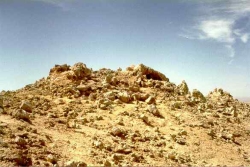 |
 Har Sin•aiꞋ Summit Cave (Same cave Mosh•ëhꞋ hid in to see י‑‑ה.) Har Sin•aiꞋ Summit Cave (Same cave Mosh•ëhꞋ hid in to see י‑‑ה.) |
Resting under the Broom shrub, out in the mi•dᵊbârꞋ of the NëgꞋëv, Eil•i•yâhꞋu, commiserated about the failure of his demonstration on Har Ka•rᵊm•ëlꞋ to convince the king and queen of the Omnipotence of י‑‑ה – compounded by his worry and depression at being under the threat of execution. A sympathetic ma•lâkhꞋ brought him water and food for a couple of days, enabling him to continue his journey to Har Khor•eivꞋ.
After the long trip, Eil•i•yâhꞋu finally arrived at Har Khor•eivꞋ (an alternate name for Har Sin•aiꞋ). And in the same cave on its summit, where Mosh•ëhꞋ had seen י‑‑ה, Eil•i•yâhꞋu had his vision.
Eil•i•yâhꞋu spent the night in the cave on the summit of Har Khor•eivꞋ and had a dream of the DᵊvarꞋ י‑‑ה, saying, "What is here for you, Eil•i•yâhꞋu?"
Eil•i•yâhꞋu responded: "I've been absolutely zealous for י‑‑ה Ël•oh•eiꞋ Tzᵊvâ•otꞋ, because Bᵊn•eiꞋ-Yi•sᵊrâ•eilꞋ have abandoned your bᵊrit, they have destroyed Your Altars, and killed your Nᵊviy•imꞋ by the sword. I'm the only one left and they request to take my nëphꞋësh."
The DᵊvarꞋ י‑‑ה replied, "Go out of the cave. Stand on the Har before י‑‑ה. Then, look, י‑‑ה was passing by.
And a great and powerful ruꞋakh tore through the mountains, dislodging and smashing boulders before י‑‑ה. But י‑‑ה was not in the ruꞋakh.
After the ruꞋakh was an earthquake. But י‑‑ה was not in the earthquake.
After the earthquake was a fire. . But י‑‑ה was not in the fire.
After the fire was a Tenuous Quiet Voice.
When Eil•i•yâhꞋu heard, he wrapped his face in his mantle and went out and stood at the entrance to the cave. Then he heard a voice saying, "What is here for you, Eil•i•yâhꞋu?"
So Eil•i•yâhꞋu repeated: "I've been absolutely zealous for י‑‑ה Ël•oh•eiꞋ Tzᵊvâ•otꞋ, because Bᵊn•eiꞋ-Yi•sᵊrâ•eilꞋ have abandoned your bᵊrit, they have destroyed Your Altars, and killed your Nᵊviy•imꞋ by the sword. I'm the only one left and they request to take my nëphꞋësh."
Then י‑‑ה explained the meaning of his vision: "Go back the way you came, and then continue on to the mi•dᵊbârꞋ near Damascus, Syria and anoint Khazâeil mëlꞋëkh over Syria. On you way through the Shom•ronꞋ, anoint YeiꞋhu mëlꞋëkh over (the 10 Shom•ronꞋ Tribes of) Yi•sᵊr•â•eilꞋ and anoint Ël•i•shâꞋ Bën-Shâ•phâtꞋ as a Nâ•viꞋ as your replacement."
The ruꞋakh: "Whoever escapes the sword of Khazâeil,
The earthquake: YeiꞋhu shall kill. And whoever escapes the sword of YeiꞋhu,
The fire: Ël•i•shâꞋ Bën-Shâ•phâtꞋ shall kill.
The Tenuous Quiet Voice: But I will leave in (the 10 Shom•ronꞋ Tribes of) Yi•sᵊr•â•eilꞋ 7,000 – all the knees that have not bowed to BaꞋal and every mouth that has not kissed it."
Rabbis have asserted a myriad of agenda-driven interpretations. Scripture is crystal clear about never defending wrong, no matter who does it. Cursed are those who call good wrong or wrong good (Yᵊsha•yâhꞋu 5.20). Do not be among the consensus of wrong-doing (Shᵊm•otꞋ 23.2). The list of incidents in Scripture where a Nâ•viꞋ called out wrong-doers in Yi•sᵊr•â•eilꞋ to make tᵊshuv•âhꞋ is long – even the main purpose of a Nâ•viꞋ. No one in the history of Yi•sᵊr•â•eilꞋ was more confrontational than the Nᵊviy•imꞋ – except Mosh•ëhꞋ!
However, the point made by Eil•i•yâhꞋu's vision is that י‑‑ה is neither in the ruꞋakh of a king among the goy•imꞋ (e.g., Syria), nor in the earthquake of a king of (the 10 Shom•ronꞋ Tribes of) Yi•sᵊr•â•eilꞋ, nor even – perhaps emphasize the point – in the "miracle" Godfire-stone demonstrated in the previous chapter (Mᵊlâkh•imꞋ ÂlꞋëph 18.25-40, see Pâ•râsh•atꞋ Pinkhas Ha•phᵊtâr•âhꞋ for 5770 / 2010) by a Nâ•viꞋ of י‑‑ה. Rather, י‑‑ה is in the Tenuous Quiet Voice of the 7,000 of Yi•sᵊr•â•eilꞋ who remain true to י‑‑ה – the faithful whom Eil•i•yâhꞋu had lost sight of in his (understandable but) self-immersed commiseration. A shepherd may not lose sight of the flock for whom he is responsible.
And who are the forgotten – Tenuous Quiet Voice – faithful in Yi•sᵊr•â•eilꞋ today? Ultra-Orthodox Kha•reid•imꞋ? Miso-Judaic secular Israelis? I see a large number of Tenuous Quiet Voice moderate Orthodox in Israel; and I've seen a large number of them in the U.S. I know there must be many in other places around the world as well. Who is defending them like a shepherd? The answer to that is "a precious few" Orthodox rabbis – and they mostly fear to "man up." It certainly isn't the Ultra-Orthodox Kha•reid•imꞋ nor those who abandon explicit mi•tzᵊw•otꞋ explicitly written in Tor•âhꞋ, whether neo-"Modern Orthodox" or non-Orthodox. The Tenuous Quiet Voice moderates are found in the middle – caught in-between and being crushed between both evils. You're better off spitting on Superman's shoes than mistreating the Tenuous Quiet Voice of Yi•sᵊr•â•eilꞋ! Woe is you!
To back-sliders, the Nâ•viꞋ is in-your-face confrontational, both to warn the recalcitrant not to transgress and to prod transgressors to make tᵊshuv•âhꞋ, bringing TzëdꞋëq and khësꞋëd to the Tenuous Quiet Voice of Yi•sᵊr•â•eilꞋ – shepherding His flock. By contrast, woe to Mosh•ëhꞋ or any Nâ•viꞋ who, even momentarily, loses sight of that! That was the reason י‑‑ה replaced him with Ël•i•shâꞋ Bën-Shâ•phâtꞋ. And it was the same reason that got Mosh•ëhꞋ in trouble: building his own image and beating his own drum instead of shepherding the Tenuous Quiet Voice of Yi•sᵊr•â•eilꞋ – that flock of the faithful who belong to י‑‑ה, not to Mosh•ëhꞋ, not to any Nâ•viꞋ and not to any rabbi(s).
The warnings to false shepherds were clear (Yᵊsha•yâhꞋu 19.1; Yᵊkhë•zᵊq•eilꞋ 34; Yi•rᵊmᵊyâhꞋu 10.21; 23.1-8; 3.15; Zᵊkhar•yâhꞋ 11.16-17). False shepherds are false ground, a sinkhole of fragmentation destined to collapse beneath the Tenuous Quiet Voice of His faithful in Yi•sᵊr•â•eilꞋ (see The Spiritual Sinkhole Threatening Israel). It is for this same reason that the replacements for these false shepherds have already been anointed to replace those rabbis who have lost sight of the Tenuous Quiet Voice of Yi•sᵊr•â•eilꞋ. י‑‑ה replaced Eil•i•yâhꞋu and Mosh•ëhꞋ for far less than the grievous abuses of today's false shepherds, who are unworthy to tie the sandals of Eil•i•yâhꞋu or Mosh•ëhꞋ.
|
|
Covering two pârâshot last Shab•âtꞋ, the Haphtâr•âhꞋ No•sakhꞋ Bal•a•diꞋ Tei•mân•itꞋ is a week ahead of both the Ash•kᵊnazꞋi and Sᵊphârâdi portions, for the next week or so. (The No•sakhꞋ Bal•a•diꞋ is the older and more pristine Tei•mân•iꞋ tradition, compared to the alternate ShamꞋi—modern Syrian reform—tradition.)
There is a difference between Ash•kᵊnazꞋim and Sᵊphâ•râd•imꞋ regarding the passage that should be read for the Haphtâr•âhꞋ of PiꞋnᵊkhâs, depending upon whether this pâ•râsh•âhꞋ falls before (as this year) or after the fast of Fourthmonth (Babylonian assimilated to "Tamuz").
Pâ•suqꞋ 19.16: "And Ëli•shâꞋ Bën-
 437x500.jpg "olive-oil ceramic pitcher (cityofdavidstore.org)") |
| Olive-oil ceramic pitcher (cityofdavidstore) |
The verb from which Mâ•shiꞋakh derives is מָשַׁח A
Interestingly, Ëli•shâꞋ Bën-
Lesson: the watchcare of a shepherd is more essential, more enduring, and more important to י--ה than the charisma of power to do miracles.
|
|
| Nᵊviy•imꞋ | Translation | Mid•râshꞋ RibꞋi Yᵊho•shuꞋa: NHM |
NHM |
|---|---|---|---|
| bᵊ-Mid•barꞋ 27.15-17 | Mosh•ëhꞋ spoke to 'ה saying, 16 May 'ה, the Ël•oh•imꞋ of ru•akh•otꞋ, raise up a pâ•qidꞋ for all bâ•sârꞋ; over the Eid•âhꞋ. 17 who shall go forth before them, and who shall come before them; and who shall lead them forth and who shall bring them; then the Eid•atꞋ 'ה shall not be like a tzon that has no shepherd. | Having seen the qᵊhil•otꞋ,4.25.1 he had ra•kham•imꞋ 9.36.0 for them, because they were plundered and despoiled,9.36.1 like (bᵊ-Mid•barꞋ 27.17) 'sheep that have no shepherd.' 9.36.2 | NHM 9.36 |
| bᵊ-Mid•barꞋ 28.9 | And on Yom Shab•âtꞋ, two wholesome yearling kƏvâs•imꞋ; and a Min•khâhꞋ of 4.4 liters of fine-flour mingled with olive-oil, along with its appropriate beverage. | Or haven't you studied 12.5.0 what is written in תּוֹרָה,5.17.1 that the Kohan•imꞋ 2.4.1 minister on Shab•âtꞋ 12.1.1 just as they do on days that are khol 12.5.1—without guilt.12.5.2 | NHM 12.5 |
|
|
The Haphtâr•âhꞋ section (5759) concluded that the watchcare of a shepherd is more essential, and enduring, than the charisma of power.
 | ||
| 2012.06.04 Kha•reid•iꞋ (Ultra Orthodox) Khananya Rabinovitz spit at two women he claimed were not dressed modestly |
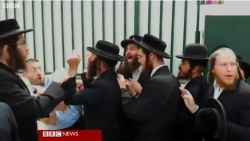 |
 BBC video 2011.10.10 – Ultra-Orthodox Kha•reid•imꞋ spit on an eight year old Orthodox elementary schoolgirl, calling her a פְּרוּצָה (whore), a זוֹנָה (slut-prostitute) and a שיקצע or שיקסע" (assimilated German – namely, Yiddish – for "detestable goyah girl"); according to mother, Hadassah Margolis (dossim.com/ContentPage.aspx?item=352). They also assault an Orthodox rabbi (blue shirt) for being moderate – Beit ShëmꞋ ësh, Israel BBC video 2011.10.10 – Ultra-Orthodox Kha•reid•imꞋ spit on an eight year old Orthodox elementary schoolgirl, calling her a פְּרוּצָה (whore), a זוֹנָה (slut-prostitute) and a שיקצע or שיקסע" (assimilated German – namely, Yiddish – for "detestable goyah girl"); according to mother, Hadassah Margolis (dossim.com/ContentPage.aspx?item=352). They also assault an Orthodox rabbi (blue shirt) for being moderate – Beit ShëmꞋ ësh, Israel  |
It is the lack of exactly this watchcare responsibility that תּוֹרָה criticizes (Yᵊkhëz•qeilꞋ chapter 34). This is further corroborated by
According to all Jewish polls, modern fanatic, Ultra-Orthodox / Kha•reid•imꞋ rabbis have already driven away 95% of the flock (estranged from תּוֹרָה and Ha•lâkh•âhꞋ) and are becoming more irrelevant to Israel and the Jewish community—including the
Traveling around all of the cities and their suburbs teaching in the local Bat•eiꞋ-ha-KᵊnësꞋët, reciting the joyful news and caring for every kind of disease and every kind of sickness, RibꞋi Yᵊho•shuꞋa noted this even in his day (NHM 9.35-38): "Having seen the Qᵊhil•otꞋ, he had rakham•imꞋ for them because they were plundered and despoiled—like (bᵊ-Mi•dᵊbarꞋ 27.17) 'sheep that have no shepherd.'"
|
|
Then you have other Dᵊvâr•imꞋ [namely, perpetrators of "abominations"] who are given into the hand of Zealots who have the zeal of י--ה to wreak vengeance upon them, like PiꞋnᵊkhâs did.
As we have memorized in this chapter [of Tal•mudꞋ] on '[Punishment by] Burnings' (81b): Zealots assault the thief of a brass cup, the curser [who employs] magic and the Aramaic paramour; but a Ko•heinꞋ who uses [utensils in the Beit ha-
And it's said concerning this in the Gᵊmâr•âꞋ, Rav Kahana asked Rav, The Zealots didn't assault him, what is that? [Were they] absolutely great men?
It was taught to Rav Kahana in a dream, "Yᵊhud•âhꞋ betrayed and a to•eivah was made in Yi•sᵊr•â•eilꞋ and in Yᵊrushâlayim, because Yᵊhud•âhꞋ has profaned the QoꞋdësh [people? Mâ•shiꞋakh?] of י--ה, whom He loved, and has become husband to the daughter of a foreign Eil" (Ma·lâkh·iꞋ 2.11). It came saying to him, Thus Scripture taught, [though] he was remembered as absolutely great, 'Yᵊhud•âhꞋ betrayed,' this is Avodah Zarah, and so He said, "You have betrayed Me, Beit Yisra•eil," declared י--ה' (Yi•rᵊmᵊyâhꞋu 3.20).
'And the to•eiv•âhꞋ that was made in Yi•sᵊr•â•eilꞋ and in Yᵊrushâlayim,' this is homosexual-sodomy, and so it says, "with a male you [masc.] shall not lie as a man lies with a woman, it is a to•eivah" (wa-Yi•qᵊr•âꞋ 18.22) "because Yᵊhud•âhꞋ has profaned the QoꞋdësh of י--ה, whom He loved."
This is an idolatrous "sacred marriage" consort, and so it is said, There shall be no 'qᵊdeishah [female temple-priestess consort; common in ancient pagan temples] from among the daughters of Yi•sᵊr•â•eilꞋ nor a 'qadeish [male temple-consort; also common in ancient pagan temples] from Yi•sᵊr•â•eilꞋ" (Dᵊvâr•imꞋ 23.18).
"And makes himself husband to the daughter of a foreign Eil," this is coming [i.e., cohabiting] with (the Aramit goyah [female gentile, i.e. shiqtzah; a female abomination]; and it is written in Torah, "And י--ה shall excise the man who does this (stirring-up and answering-back the tents of Ya•a•qovꞋ) and then busses a Minkhah to י--ה of tzᵊvâ•otꞋ" (Ma·lâkh·iꞋ 2.12).
If a ta•lᵊmidꞋ is sagacious, he won't have any stirring-up among the sages, nor answering-back among the ta•lᵊmid•imꞋ. If he is a Ko•heinꞋ, he will not [delegate to] his son to "bus a Minkhah to י--ה of tzᵊvâ•otꞋ."
•marꞋ Rabi Khiya Bar Aba, Everyone who comes [i.e., cohabits] with (the Aramit goyah [female gentile, i.e. shiqtzah; a female abomination] it's tantamount to marrying Avodah Zarah, like the Scripture, "and he makes himself husband to the daughter of a foreign Eil" (ibid., 11).
The 'daughter of a foreign Eil,' this is the "coming with [i.e., cohabiting] with (the Aramit goyah [female gentile, i.e. shiqtzah; a female abomination]." And we say concerning this that the Rav of the coming day •marꞋ, His Beit-Din of the heavens has decreed, the one who comes [i.e., cohabits] with (the Aramit goyah [female gentile, i.e. shiqtzah; a female abomination] has made her culpable for [transgressing the mi•tzᵊw•otꞋ] of nmg"w (nidah, maid-servant, goyah and wife of a man). For Rav Abin •marꞋ, culpable for nmg"p (nidah, maid-servant, goyah and consort). However, wifehood doesn't agree with them and, second, womanhood isn't licentious.

(Translated so far)
|
|
|
 250x167.jpg "Shitim, across the Yardein fm Yerikho (Jericho)")
 801x536.jpg "Click to enlarge")