
 Warning Stone from בֵּית הַמִּקְדָּשׁ סוֹרֵג:
ΑΛΛΟΓΕΝΗΣ: No Closer— (Museum Tschinili-Kirschk. Istanbul, Turkey.) |

1st Century C.E.
|
One cannot come to grips with the development of Christianity as it was originally defined without first internalizing the religious-political caldron that orchestrated the reaction between the two principle, and immiscible, forces—Judaism versus Hellenism—to forge Christianity. At least as far back as B.C.E. 4, the conflict between these two immiscible forces was recognized by Gaius Octavius Καισαρας Augustus as the principle irresolvable incompatibility that, if forced to intermingle, would strike together like flint to ignite a catastrophic conflagration. The same forces have, ever since, produced the same misojudaism. To help keep track of these two immiscible forces, they will be color coded:
Judaic (פְּרוּשִׁים and Essene צְדוֹקִים)
Hellenist ("Jews," led by the aristocratic "Temple" צְדוֹקִים ⇒ Σαδδουκαιοι, and gentiles)
Hellenized, including originally Canaanite ⇒ Israeli Judaic ⇒ Hellenist (primarily Arab) Occupied geographical cities or areas
From the Roman expulsion of יְהוּדִים from "Aelia Capitolina" in 135 C.E. through the 4th century C.E., Greek-speaking gentile Roman Hellenist Διαθηκη Καινη (NT) were limited by their Greek language to rely solely on accounts told to them in Greek by Hellenizing Jews (even Παύλος the Apostate Hellenizer had been dead since ca. 67 C.E.), ill-informed proselytes and–mostly–blatantly assimilated Hellenist apostates (like Ιωσηπος).
These Roman Hellenists never budged from their Hellenist position of rejecting תּוֹרָה, therefore declaring followers of the original נְצָרִים פְּרוּשִׁים Jews (who had been taught by רִיבִּי יְהוֹשֻׁעַ) to be "under the law," "enemies of [their Hellenist perception of] God and the Church" and "servants of Satan." Down through subsequent centuries, these pronouncements have been the cause of countless pogroms, the Inquisition, the Holocaust and still fuel persecution of Jews today.
Peering back 1-3 centuries into the 1st century Jewish community from outside, these Hellenist Roman gentiles perceived only what their gentile Hellenist lenses could process—of accounts passed down to them by Hellenist Jews and some Hellenist, primarily Arab, gentiles. Their knowledge of Judaism was less than gentiles today (after two additional millennia of study) know of the Orthodox Jewish community and Orthodox Judaism—blind ignorant and filled with misojudaic misconceptions. As a result, these 2nd-4th century, Greek-speaking Roman, primarily Arab, gentiles were unable to distinguish rival (Hebrew-speaking) Jewish factions, muddling them all into their composite stereotype of "the Jews"—as they redacted the final text of the Διαθηκη Καινη (NT) that the world has today.
Thankfully, the Dead Sea Scrolls, (4Q) MMT in particular, has removed all doubt about what was always evident to objective readers of the descriptions of the 1st century Jewish community and Judaism in the Judaic literature (as contrasted against the Hellenist Greek literature—principally the Διαθηκη Καινη (NT).
This Hellenized stereotype has glossed over the differences in language and culture between Judaism and Hellenism, which lay at the very core of the #1 argument among 1st-century Jews: the Oral Law of תּוֹרָה versus assimilation into Ελλην—Hellenism. This assumptive failure to distinguish between opposites of language, culture and religion—symptomatic of Christians and Jews each nursing extreme ignorance, bias and misconceptions of the other—is blindly memorized and, though these errors are beginning to be acknowledged (as knowledge of the DSS and archeological discoveries are disseminated), they still continue to be assumed, and unquestioningly regurgitated, by many Ph.D.s and Professors of History alike.
Relating to the 1st-century, historical dissonances between
תּוֹרָה (Judaic) versus Ελλην (internally within the Jewish community),
יְהוּדִים versus the גּוֹיִם (external to the Jewish community) and
יְהוּדָה and יְרוּשָׁלַיִם versus Ρωμη.
requires developing the ability to distinguish between their cultures, religions and languages that, coupled with pressures for יְהוּדִים to assimilate into the Ελλην world of their Roman occupiers, created a schismatic cancer that would grow, divide, inflame and ultimately lead to pogroms, the Inquisition and the Holocaust.
This conflict-laden cancer can only be diagnosed by keeping the divisive differences they faced daily in the forefront of your study, precluding contra-historical assumptions of compatibility that allows the many oversights and impossible misconceptions that are widespread among today's students of 1st-century, Judeo-Roman and Christian history. The reader will quickly develop an appreciation of the persistent conflict, and its inexorable intractability, between the (usually Hebrew language) תּוֹרָה figures and concepts in blue (which includes the נְצָרִים פְּרוּשִׁים) contrasted against the (usually Greek language) Ελλην figures and concepts in amber.
This apparatus permits the reader to see at a glance the general predominance within any screen of text as well as changes and trends when screening up or down.
Only by keeping these heterogenous players distinct can one recognize two primary and distinct iterations of increasingly Hellenist assimilation develop from this milieu into gentile (primarily Arab), Roman Christianity.
To help you cope, I've tried to limit the number of untransliterated Hebrew and Greek terms to two contrasting essential nuclei; plus, I've provided instant-English by simply hovering the cursor over non-English words having an amber or blue background. Additionally, nearly all of these also have links that you can click for a more complete glossary definition.
Although it may at first seem daunting, there are only a handful of words; they are merely used over and over, making the page look far more complicated and difficult than it really is. Yet, if you haven't worked your way through this section in this website, then—be you Ph.D. or Professor in one of the most eminent universities in the world—you do not grasp the fundamental differences and conflicts in the 1st century C.E. enumerated above. Stop being part of the regurgitated ignorance being proliferated by the ignorant "assumers"—grinding their religious axe instead of exercising scientific method and scholarship.
If it was easy, everyone would already have done it. Apply yourself seriously, work your way through this and learn.

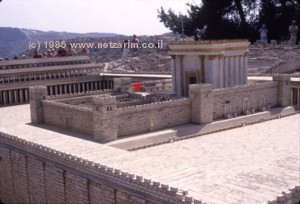 |
 ● Συνεδριον Meeting Hall on balcony |
The rabbinic tradition of the transmission of תּוֹרָה, while helpful, is grossly oversimplified.
The בֵּית דִין הַגָּדוֹל was chaired by זוּגוֹת, a pair of leaders functioning, counterbalanced, in flank:
From the inception of the בֵּית דִין הַגָּדוֹל by Mosh•ëhꞋ (Shᵊm•otꞋ 18.25-26; bᵊ-Mi•dᵊbarꞋ 11.16-17), who was himself flanked by A•har•onꞋ, Mosh•ëhꞋ anointed Yᵊho•shuꞋa Bën-Nun and (while the anointing ceremony itself is not mentioned) ËlâzârꞋ the כֹּהֵן.
This succession of pairs heading the בֵּית דִין הַגָּדוֹל continued through the Zᵊqan•imꞋ (Sho•phᵊt•imꞋ) through the paired partnering of מְלָכִים (as נָשִׂיא) and Nᵊviy•imꞋ (as אַב בֵּית דִין) until the last מֶלֶךְ of יְהוּדָה was vanquished in B.C.E. 586.
From B.C.E. 586, the position of נָשִׂיא could no longer be filled by a מֶלֶךְ יְהוּדָה.
Not much is known about the leadership of the next link in the succession listed by the rabbis: אַנְשֵׁי כְנֶסֶת הַגְּדוֹלָה in the time of ; ËꞋzᵊr•â (B.C.E. 409-359).
The אַנְשֵׁי כְנֶסֶת הַגְּדוֹלָה, Hellenized to γερουσια, was led by Nᵊkhëm•yâhꞋ Bën-Kha•kha•lᵊyâhꞋ (probably of the tribe of יְהוּדָה, of בֵּית-דָּוִד) as נָשִׂיא, and ËꞋzᵊr•â the כֹּהֵן בֶּן-צָדוֹק, as the אַב בֵּית דִין.
In this body, for the first time, learned laymen—the origin of the פְּרוּשִׁים, who first appear ca. B.C.E. 135—joined with כֹּהֲנִים, Lewiy•imꞋ and בֵּית-דָּוִד in authoritatively interpreting and adjudicating תּוֹרָה in case law (Tor•âhꞋ shë-bikh•tâvꞋ). The result was a diluting of צְדוֹקִים Hellenism and the Greek name, γερουσια consequently retreated to the Hebrew name בֵּית דִין הַגָּדוֹל.
This continued until B.C.E. 175.
In B.C.E. 175, the last כֹּהֵן הַגָּדוֹל faithful to תּוֹרָה, Yᵊkhon•yâhꞋ Bën-Shim•onꞋ 2 בֶּן-צָדוֹק הַכֹּהֵן, was ousted by his rabidly Hellenist brother, "Yᵊho•shuꞋa Bën-Shim•onꞋ 2 בֶּן-צָדוֹק הַכֹּהֵן—who preferred the Hellenized name: "Ιασονας." That year, "Ιασονας" went to Syria and purchased from Αντιοχος the transferral of the position of כֹּהֵן הַגָּדוֹל from Yᵊkhon•yâhꞋ to himself in return for a large sum of money and in return for his promise to Hellenize the Jews – and Judaism" (see Kha•nukh•âhꞋ).
From B.C.E. 175, the schism between תּוֹרָה and Hellenist factions within the בֵּית דִין הַגָּדוֹל resulted in a schism between the anti-Hellenist פְּרוּשִׁים min and the Hellenizing pseudo-צְדוֹקִים min (which had already split from the original priestly צְדוֹקִים who would later become known as Essenes and Qum•rânꞋ צְדוֹקִים).
The בֵּית דִין הַגָּדוֹל remained predominated and controlled by the Hellenizing pseudo-צְדוֹקִים. By the time of the destruction of the בֵּית הַמִּקְדָּשׁ in 70 C.E., it is clear that the בֵּית דִין הַגָּדוֹל had been controlled by the פְּרוּשִׁים for 40 years (i.e., since 30 C.E., details and documentation below). It has always been disputed exactly when the balance of power tipped from the Hellenizing pseudo-צְדוֹקִים to the פְּרוּשִׁים.
According to the Encarta Encyclopedia, the Greeks of Asia Minor, Hellenists, identified Mithra, the Persian sun-god, with Ηλιος. In many respects, Mithraism was the pattern later continued by these same Hellenists in forming Christianity; for example, in the ideals of humility and brotherly love, baptism, the rite of communion, the use of holy water, the adoration of the shepherds at Mithra's birth, the adoption of Sungodday [displacing Shab•âtꞋ] and of December 25th (Mithra's birthday) as holy days, and the belief in the immortality of the soul, the last judgment, and the resurrection. ("Mithraism," Encarta '95).
The most important, and revolutionizing, source document discovered in the past 2 millennia, providing spectacular and unparalleled insight into 1st-century Judaism that overturns "traditional" assumptions, without which no Ph.D. or Professor of History correctly grasps 1st-century Judaism, is (4Q) MMT, by Prof. El•ish•aꞋ Qim•ronꞋ, Chairman of the Department of Hebrew Language at Ben-Gurion University of the NëgꞋëv in יִשְׂרָאֵל
According to Ιωσηπος, in B.C.E. 57, the Roman-Syrian (Arab) governor, Gabinus, divided the Holy Land into five Roman (primarily Arab) provinces, placing a Συνεδριον at the head of each. The Senate Assembly in יְהוּדָה had been purchased from the Roman-Syrian Arab governor back in B.C.E. 175 and from ca. B.C.E. 57 it became known as the Συνεδριον rather than בֵּית דִין הַגָּדוֹל.
It seems likely that, during this period, the Hellenizing domination of the Συνεδριον by the Hellenist pseudo-צְדוֹקִים included their arrogation of the position of נָשִׂיא in addition to the אַב בֵּית דִין.
The 1st-century Bat•eiꞋ ha-KᵊnësꞋët in which
Moreover, it should be obvious that neither ordinary gentiles nor misojudaic Christians frequent, or would be permitted, in a Beit ha-KᵊnësꞋët.
Louis H. Feldman (The Omnipresence of the God-Fearers, Biblical Archeology Review, 86.09-10, pp. 58-69), combined with Dead Sea Scroll (4Q) MMT, demonstrate that such a non-Jew was a proselyte—the Geir To•shâvꞋ—who had met the
We urge those who are committed to following the authentic
 |
 (marble, Herod Exhibition) |
Although "Ηρωδης [the Great] considered himself the rightful king of [יְהוּדָה], … [he] was severe with [יְהוּדִים] and tortured and put to death anyone suspected of disloyalty, [while being] lenient with the [Hellenist Arabs] who inhabited the cities ceded to him by Gaius Octavius Καισαρας Augustus." However, while his policy of placating [יְהוּדִים] while showing magnanimity toward the Hellenist Arabs kept him in control, "no matter how hard he tried to gain the good will of the [Hellenist Arabs] in his domain, he failed. They regarded him as a tyrant and looked upon him as one of the [יְהוּדִים], whose manners and ways of life differed greatly from theirs; they regarded [יְהוּדִים] as barbarians." (Zeitlin, p. 42).
By patronizing both sides, Hellenist Arabs and anti-Hellenist יְהוּדִים, in the end he was revered by neither. Only Gaius Octavius Καισαρας Augustus seems to have been his genuine friend. Yet, Ηρωδης's syncretism, superficially patronizing both Hellenism and Judaism, was certainly the inspiration for Παύλος the Apostate Hellenizer to produce the theology, Christianity, that would appeal to "Hellenist Jews" and Arabs (i.e., gentiles) fooled into believing that these two immiscible opposites could be homogenized into one theology.
 |
 Gaius Octavius Caesar Augustus (white marble 1st century ht 204cm Vatican Museum) Gaius Octavius Caesar Augustus (white marble 1st century ht 204cm Vatican Museum) |
In B.C.E. 20-19, Ηρωδης the Great "ordered the people to take an oath of allegiance to himself and to Gaius Octavius Καισαρας Augustus. It is probable that at this time, too, daily sacrifices for the welfare of the emperor and Rome were instituted in the בֵּית הַמִּקְדָּשׁ. Both were an expression of subjugation" (Zeitlin, p. 43).
Those who refused to take the oath of allegiance were severely punished or put to death. But he made some exceptions…" (Zeitlin, p. 43). These included Hi•leilꞋ (Greek Pollion) and ShaꞋmai (Greek Samias), the Essenes and a group, numbering about 6,000 members, of Apocalyptic פְּרוּשִׁים, who freely "prophesied" whatever would gain them political leverage (Zeitlin, p. 44-45). "They strongly opposed Ηρωδης [the Great], considering him a זָר and not properly of the royal [Davidic] family. They resented subjugation to Rome in any form, believing that [אֱלֹהִים] by supernatural power, would free [יְהוּדָה]… Ηρωδης [the Great] imposed a fine on them" (Zeitlin, p. 44-45).
To mitigate the institution of the pledge of allegiance, Ηρωδης the Great "remitted a third of the exorbitant taxes… and turned his attention to… [enhancing] the בֵּית הַמִּקְדָּשׁ" (Zeitlin, p. 45).
"Ιωσηπος says that when Ηρωδης [the Great] completed the [enhancement], the people were filled with joy and gave thanks to [אֱלֹהִים]. Ηρωδης [the Great] himself offered hundreds of oxen to God and others made similar offerings. It might seem that Shᵊlom•ohꞋ ha-•MëlꞋëkh and ZᵊruꞋ-Bâ•vëlꞋ had established the precedent in this regard. [However, unlike Ηρωδης the Great, they were not Εd•om•imꞋ "strangers."] Ιωσηπος does not mention, and rabbinic literature does not refer to, consecration or dedication on the completion of Ηρωδης [the Great]'s [enhancement], as was the case in connection with the earlier ruler's celebrations. Moreover, during the Second Commonwealth the sages did not favor the offering of sacrifices to [אֱלֹהִים], except such as were prescribed in [תּוֹרָה]. It is questionable whether the spiritual leaders and the rank and file of the [יְהוּדִים] were happy over the [enhancement] that Ηρωδης [the Great] built. They knew from the Bible that [even] דָּוִד הַמֶלֶךְ was not permitted to build a [בֵּית הַמִּקְדָּשׁ] to [אֱלֹהִים] because he was a warrior and had shed blood. Ηρωδης [the Great]'s hands were bloody, not only from the death of the enemies of [יְהוּדָה], but from many innocent [יְהוּדִים] as well. Thus, rabbinic literature makes reference to Ηρωδης [the Great]'s building, but never refers to it as a בַּיִת. The Tal•mudꞋ speaks about the First בַּיִת (of Shᵊlom•ohꞋ ha-•MëlꞋëkh) and the Second בַּיִת (of ZᵊruꞋ-Bâ•vëlꞋ) but never refers to a Third בַּיִת—and this period is referred to only as the period of the Second בַּיִת. Ηρωδης [the Great]'s [enhancement] was beautiful, but, because it was built by Ηρωδης [the Great], the sages ignored it" (Zeitlin, p. 52).
The local Diaspora יְהוּדִים complained against the majority Hellenist Turks, who were preventing them from keeping שַׁבָּת and from sending money to יְרוּשָׁלַיִם for the בֵּית הַמִּקְדָּשׁ… [King] Agrippa [I] confirmed the right of the [יְהוּדִים of the Turkish Diaspora] to live in accordance with the religious customs, and forbade the Hellenes (sic) to hinder the [יְהוּדִים] from sending money to יְרוּשָׁלַיִם for the בֵּית הַמִּקְדָּשׁ. While [King] Agrippa [I] was in Asia, he issued other decrees favoring the [יְהוּדִים] of the Diaspora" (Zeitlin, p. 53). However, this also aggravated and intensified misojudaic sentiments among the Hellenists Turks and Arabs.
 |
 Ancient Caesarea Harbor (photo, Univ. of Victoria article, British Columbia, Canada) Ancient Caesarea Harbor (photo, Univ. of Victoria article, British Columbia, Canada) |
Καισαρεια Σεβαστειον would become the main deep-water port – and the cancerous epicenter of Hellenist idolators that would inexorably lead to the destruction of 70 C.E.
"[יְהוּדָה] had but one port on the Mediterranean, [YaphꞋo]… [which] became increasingly inadequate… Ηρωδης [the Great] therefore decided to build a new harbor… [for which] he chose the village of Straton's Tower… [about 16 km / 10 mi.] south of Dor. He had materials assembled in the year [B.C.E.] 22 and the work begun in the year [B.C.E.] 20… Straton's Tower, hitherto an obscure village, was rebuilt into a magnificent city… Ηρωδης [the Great] built a theater and a temple of Gaius Octavius Καισαρας Augustus, and in it he placed statues of Gaius Octavius Καισαρας Augustus and Rome. The statue of the emperor was a replica of the Pheidian Zeus of Olympia… On the south side of the harbor he constructed an ampitheater for gladiatorial combats, [naked] athletic competitions and fights between wild beasts. [Ηρωδης the Great] renamed the city Καισαρεια Σεβαστειον in honor of Gaius Octavius Καισαρας Augustus. On its completion, in the year [B.C.E.] 10, it became one of the most important ports of the eastern Mediterranean coast and the economic welfare of יְהוּדָה greatly prospered as a result." (Prof. Solomon Zeitlin), p. 40-41).
 |
 Καισαρεια Σεβαστειον – full name of ancient city; Caesar Augustus' Hellenist Temple (left), ancient Israel's sole deep sea harbor and commercial hub of the Middle East (center); chariot racing arena (right) Καισαρεια Σεβαστειον – full name of ancient city; Caesar Augustus' Hellenist Temple (left), ancient Israel's sole deep sea harbor and commercial hub of the Middle East (center); chariot racing arena (right) |
The dedication of the city was celebrated with great pomp and splendor. There were musical contests, [naked] athletic contests, horse racing and fights by gladiators with wild beasts… Everything was done on an elaborate scale on a par with what was to be seen in Rome. He arranged that Olympic Games be held at four-year intervals" (Zeitlin, p. 55).
"The celebration, with its pagan overtones, displeased the spiritual leaders of [יְהוּדָה], causing them to declare that [Καισαρεια Σεβαστειον] was legally outside the land of [יִשְׂרָאֵל], and that such gentile lands outside [יִשְׂרָאֵל] were in a state of ritual uncleanness… Not long after the dedication of [Καισαρεια Σεβαστειον], Ηρωδης [the Great] completed the construction of the various buildings of the בֵּית הַמִּקְדָּשׁ. He then had a large golden eagle placed over the entrance of הַר הַבַּיִת" (Zeitlin, p. 56).
 )
)It is clear that Gaius Octavius Καισαρας Augustus recognized that, unless the two sides were mostly separated, the conflict between the פְּרוּשִׁים and Hellenist (primarily Arab) gentiles would lead to a catastrophic clash, creating a weakness in the east of the empire that would invite invasion from the Parthians. Accordingly, in order to make the region of יְהוּדָה more homogeneous (and, thus, easier to control and avert the disaster), "[Gaius Octavius] Καισαρας [Augustus] detached a few cities populated by Hellenist [Arabs], making them independent of יְהוּדָה." However, [Εd•omꞋ (Idumea)] and [the שׁוֹמְרוֹן] remained within the Εθναρχια—including יָפוֹ, [Καισαρεια Σεβαστειον]. He also dismissed Joazar grandson of Boethus from the high priesthood" (Zeitlin, p. 134).
יְהוּדָה led an uprising against Rome, proclaiming that paying tribute to Rome was a sin, tantamount to slavery (Zeitlin, p. 140). The Romans crushed the uprising and crucified 2,000 Jews—which Roman sympathizer and collaborator Ιωσηπος described as a mild Roman retaliative punishment.
After complaints of cruelty from both יְהוּדִים and שׁוֹמְרוֹנִים, [Gaius Octavius Καισαρας Augustus] deposed and exiled Αρχελαος, declared יְהוּדָה a Roman Province and named a Roman Knight, Coponius, as Procurator, responsible solely to Gaius Octavius Καισαρας Augustus (Zeitlin, p. 137).
Procurator Coponius, having no national army, was dependent upon auxiliary forces consisting of soldiers of [Καισαρεια Σεβαστειον] (Zeitlin, p. 138).
"While Rome eradicated all political authority, the Romans also made it a practice not to disturb religious authorities and allowed them to retain certain civil powers. The sacerdos provinciae, the high priest, was the head of the province, holding office for one year" (Zeitlin, p. 139).
There were 3 essentials of Roman rule: tax, conscription and Roman law. Due to religious requirements, יְהוּדָה was exempted from both of the latter two (Zeitlin, p. 137) and יְהוּדִים balked at taxation. Understandably, from a gentile perspective, יְהוּדִים, even despite receiving special privileges over other Roman citizens, because of the centrality of the bᵊrit תּוֹרָה, still remained anti-social and bellicose—the origin of misojudaism, at its very core, has always been תּוֹרָה.
"There were no serious disturbances in יְהוּדָה during the time of Gratus" [14-26 C.E.] (Zeitlin, p. 141).
From B.C.E. mid-first century (based on my Chronology of the Tanakh, from the "Big נָטָה" Live-LinkT  ), the scenario that best fits the documented historical facts, including 4Q MMT and the Dead Sea Scrolls, seems to be:
In contrast to Hi•leilꞋ the פְּרוּשִׁי, the Hellenist pseudo-צְדוֹקִים saw Sha•maiꞋ the פְּרוּשִׁי as a political minority (and, therefore, controllable) representative of the ascending פְּרוּשִׁים min, who were gaining political ground (support among the populous).
Backing the minority פְּרוּשִׁים leader in the Συνεδριον served to:
pacify the פְּרוּשִׁים min,
split the פְּרוּשִׁים min (pitting Beit Hi•leilꞋ against Beit ShaꞋmaiꞋ) and
provide the Hellenist pseudo-צְדוֹקִים an opportunity to dump their main rival, the legitimate (later known as Essene or Qum•rânꞋ) צְדוֹקִים, viz., MᵊnakhꞋëm הַצָדוֹקִי.
This appears to have resulted in the פְּרוּשִׁים gaining a foothold (or bigger foothold), ca. B.C.E. 50, in the Hellenist pseudo-צְדוֹקִים-controlled Συνεδριον.
Compounding the problems for each successive Hellenist כֹּהֵן הַרֶשׁעַ of the pseudo-צְדוֹקִים, their aristocratic pandering to the rich continued to become increasingly unpopular and alienated the Jewish populace. The פְּרוּשִׁים parleyed all of this into the election, ca. 20 C.E., of גַּמְלִיאֵל as נָשִׂיא and apparent control of the בֵּית דִין הַגָּדוֹל (aka Συνεδριον).
Discovered in Yâm Ki•nërꞋët, this Gâ•lilꞋ-boat's length is 8.2 m., its width 2.3 m. and its depth 1.2 m. Apparently a fishing boat, the vessel was large enough to carry 15 people, including a crew of five. Carbon-14 tests confirmed that the boat was constructed and used between B.C.E. 100 and 70 C.E. (mfa.gov.il).
There remained in the בֵּית דִין הַגָּדוֹל, however, a powerful undercurrent of underhanded and corrupt, opposition in the form of each successive Hellenist כֹּהֵן הַרֶשׁעַ of the pseudo-צְדוֹקִים—who were zealous to stop at nothing to wield power and protect their wealth and positions as sycophants of their patron Hellenist Roman occupiers.
In the jumble of Hellenist (Greek) versus rabbinic (פְּרוּשִׁים Hebrew) sources during this period, little confidence can be derived from these sources indicating which office was won by the פְּרוּשִׁים at this time. The consistent hints from the inception of the בֵּית דִין הַגָּדוֹל, however, suggest that the position won by the פְּרוּשִׁים during this time was the office of נָשִׂיא—and traditionally held by a descendant of בֵּית-דָּוִד. This has significant implications for the emerging פְּרוּשִׁים רִיבִּי of בֵּית-דָּוִד at this time: רִיבִּי יְהוֹשֻׁעַ!
The traditional office held by each successive Ko•heinꞋ (even the Hellenist כֹּהֵן הַרֶשׁעַ of the pseudo-צְדוֹקִים) likely continued to be אַב בֵּית דִין.
"The new procurator was portrayed by his contemporary, Φιλων, and later by Ιωσηπος, as a man of greed, venality and cruelty, utterly lacking in human compassion. He resorted to robbery and oppression. Hence there were frequent clashes between the יְהוּדִים and Ποντιος Πιλατος" (Zeitlin, p. 142). These clashes resulted from a ham-fisted determination to impose his Hellenism on the יְהוּדִים.
Ποντιος Πιλατος began the construction of an aquaduct to bring a greater water supply to יְרוּשָׁלַיִם, which suffered periodic water shortages. To pay for this construction, he seized the funds from the sacred treasury… The יְהוּדִים protested strongly against this sacrilege… [Ποντιος Πιλατος] ordered his soldiers to garb themselves as civilians with their swords concealed under their clothing. When the יְהוּדִים persisted in their protestations, he signaled his army to attack them. A fearful slaughter ensued…" (Zeitlin, p. 143).
This was the state of the Hellenists vs יְהוּדִים conflict in which רִיבִּי יְהוֹשֻׁעַ taught, פָּקִיד יַעֲקֹב "הַצַּדִּיק" began his tenure and Στεφανος was stoned.
This was the setting in 27 C.E. when רִיבִּי יְהוֹשֻׁעַ was becoming famous as the foremost פְּרוּשִׁי רִיבִּי (for which, see The Nᵊtzârim Reconstruction of Hebrew Matitᵊyâhu (NHM, in English).
Even the Διαθηκη Καινη (NT) corroborates that, at the trial of רִיבִּי יְהוֹשֻׁעַ in 30 C.E., a Συνεδριον (certainly not the "Great Συνεδριον) was predominated by Hellenizing pseudo-צְדוֹקִים—whose leaders, Ανανιας and his son-in-law (also of the House of חֲנַנְיָה) Καιαφας, were Hellenizing pseudo-צְדוֹקִים.
The very name, Συνεδριον, a Hellenist Greek term, testifies to the Hellenization of the body by the Hellenizing pseudo-צְדוֹקִים in contrast to the intensely anti-Hellenist פְּרוּשִׁים. Yet, as noted above, the בֵּית דִין הַגָּדוֹל was predominated by the פְּרוּשִׁים since 20 C.E. Clearly, the Συνεδριον conducting the trial against רִיבִּי יְהוֹשֻׁעַ—which convened at night and during a Khag (both prohibited by Ha•lâkh•âhꞋ)—was a lower Συνεδριον.
Tal•mudꞋ (Ma•sëkꞋët Pᵊsâkh•imꞋ 57a) included this priestly house in its list of כֹּהֵן הַרֶשׁעַ families: "Woe is me because of the house of חָנִין [which included his son-in-law, Καιαφας], woe is me because of their whisperings."
"Roman power appointed the [Hellenist כֹּהֵן הַרֶשׁעַ of the pseudo-צְדוֹקִים] who was in charge of the religious sites of [Judea]. And [the פְּרוּשִׁים רִיבִּי יְהוֹשֻׁעַ, like the Essene צְדוֹקִים "מֹארִי צֶדֶק" before him,] openly denounced these [Hellenist Σαδδουκαιοι כֹּהֵן הַרֶשׁעַ] priests, so much is known. This indirect threat to Roman power, together with the Roman perception that רִיבִּי יְהוֹשֻׁעַ was claiming to be the 'King of the Jews', was the reason for his condemnation.).
Accounts in the Διαθηκη Καινη (NT) document that the Συνεδριον that convicted רִיבִּי יְהוֹשֻׁעַ violated several legal requirements of a legitimate trial set forth in Ma•sëkꞋët Sunedrion 4.1 and 5.2:
Trials weren’t allowed on the day before Shab•âtꞋ or the day before a Khag;
The trial was required to be held on the grounds of the בֵּית הַמִּקְדָּשׁ, not in the house of one of the Sho•phᵊt•imꞋ;
Death-penalty cases had to be tried in daylight;
Conviction required confirmation at least one day later, giving the council time to sleep on the matter;
Capital case were supposed to begin introducing the reasons for acquittal, not with reasons for conviction.
While some scholars have asserted that Jews could not carry out the death penalty, the death penalty for blasphemy was stoning. Crucifixion was a Roman punishment for political crimes. Moreover, Jews most certainly could, and did, carry out the death penalty for blasphemy: witness the stoning of Στεφανος only about 4 years later!!! Even during his own lifetime, רִיבִּי יְהוֹשֻׁעַ intervened in a stoning of an alleged adulteress.
The criticism of secret conclave "whisperings" in Tal•mudꞋ is consistent with the secret night convening of the Hellenizing pseudo-צְדוֹקִים min of the Συνεδριον.
The entire premise that Jesus saved goy•imꞋ rather than Jews was predicated on the first-order quintessential Christian doctrine that "God" had rejected the Jews—because the Jews had first rejected "God," in the person (man-god) of the Lord Jesus" and, consequently, God had "chosen" the goy•imꞋ to displace "the rejected Jews"—"the Jews" thereby having "made themselves enemies of God" and, therefore, "servants of
Only then does it follow that the salvation of Jesus was, as a result, given to Christian goy•imꞋ instead.
Thus, blaming the "the Jews" for "rejecting the Lord Jesus" was absolutely essential to Christian salvation and theology: without "the Jews" rejecting Jesus, there could be no transferral of Judaic כִּפּוּר to the Hellenist goy•imꞋ "personal salvation"!
This unavoidable fabricated thread from which ALL Christianity, and the "pesonal salvation" of EVERY Christian dangles, is what, despite all attempts to make nice-nice, always, inexorably, brings Christianity back to its existential misojudaisc root: the Displacement Theology without which Christianity is patently invalid.
Displacement Theology can be glossed over but never renounced without invalidating Christianity. Thus, Christian Displacement Theology, with its unavoidable misojudaism, is irremediable without invalidating Christianity ideologically, at its very core. Reconciliation between Christianity and Judaism is intractably impossible because Judaism, unless it is declared false (as Christianity holds), invalidates Christianity (transferral of covenant and salvation)—and false Judaism is clearly the enemy of God, therefore…
Thus,
the פְּרוּשִׁים בֵּית דִין הַגָּדוֹל rejection of the Συνεδριον that had executed רִיבִּי יְהוֹשֻׁעַ (documented below),
the פְּרוּשִׁים בֵּית דִין הַגָּדוֹל opposition to the Συνεδριον that continued to persecute the original פְּרוּשִׁים Jewish נְצָרִים followers of רִיבִּי יְהוֹשֻׁעַ—Hellenists persecuting פְּרוּשִׁים that Christians turn on its head to claim that this was Jews persecuting Christians!!!
the פְּרוּשִׁים defense of the followers of רִיבִּי יְהוֹשֻׁעַ in the Συνεδριον and (as documented by Ιωσηπος) even against the gentile (primarily Italian and Arab) Romans!!!
ALL contradicted, and militate against, the post-135 C.E. gentile, primarily Italian and Arab, Hellenist Roman Christian premise that "the Jews" had rejected רִיבִּי יְהוֹשֻׁעַ (and vice-versa). The פְּרוּשִׁים had not rejected their own פְּרוּשִׁים רִיבִּי יְהוֹשֻׁעַ. These inconvenient facts constituted existential contradictions of Christianity and the Church, which had to be redacted out of their Διαθηκη Καινη (NT)—erased from Christian history. But the Judaic literatureretains the evidence to piece it back together.
Rejection of the illegitimate Συνεδριον of the כֹּהֵן הַרֶשׁעַ of the Hellenist pseudo-צְדוֹקִים by פְּרוּשִׁים—Israel/Jews—who were demonstrating sympathy to רִיבִּי יְהוֹשֻׁעַ incontrovertibly contradicted and invalidated the Christian claim that "the Jews" had rejected him! Jews sympathetic to רִיבִּי יְהוֹשֻׁעַ, proving the Church's lie, was unacceptable to the Church. Thus, the event had to be erased—redacted—from Christian-controlled history.
As a result, the trial of רִיבִּי יְהוֹשֻׁעַ also presents us with the most likely reason for the shattering schism in the Συνεδριον precisely at the time—and, obviously, as a result—of this conviction, by the Hellenizing pseudo-צְדוֹקִים, of a פְּרוּשִׁי רִיבִּי, carried out behind the backs of the פְּרוּשִׁים and, thereby, betraying the פְּרוּשִׁים in a political power play – pushing Herod Antipas' "hot button" by alleging that
This is the inescapable core of misojudaism (misdefined as "antisemitism"). No nice words from any pope, seminarian or evangelist can alter these dynamics. That wishful thinking is pure Jewish self-delusion. The only alternative for Jews is to show that Christianity IS false and invalid.
(ca. 30 C.E.)
Any suggestion that the internal break-up of the Συνεδριον occurred the same year as, yet was unrelated to, the greatest event ever to shape history, is laughably absurd. The only intelligent question is what that connection was.
 |
 |
In his
יב בתחילה כשנבנה המקדש, היו בית דין הגדול יושבין בלשכת הגזית שהייתה בעזרת ישראל; והמקום שהיו יושבין בו חול היה, שאין ישיבה בעזרה אלא למלכי בית דויד. וכשנתקלקלה השורה, גלו ממקום למקום. ולעשרה מקומות גלו, וסופן לטבריה; ומשם לא עמד בית דין גדול, עד עתה. וקבלה היא שבטבריה עתידין לחזור תחילה, ומשם נעתקין למקדש.
(12 In the beginning, when the בֵּית הַמִּקְדָּשׁ was built, the בֵּית דִין הַגָּדוֹל would convene in the לִשְׁכַּת הַגָּזִית that was in the עֶזרַת יִשׂרָאֵל. And the place in which they convened was khol, for there is no convening in this court except for the Royalty of בֵּית-דָּוִד.
And when the succession broke down, they exiled themselves from place to place. They exiled themselves to ten places, the last of them being Τιβεριας. From then on, the בֵּית דִין הַגָּדוֹל ceased to convene until now. It is accepted that they are destined to return first to Τιβεριας and from there they will relocate to the בֵּית הַמִּקְדָּשׁ.)
יג ארבעים שנה קודם חרבן בית שני בטלו דיני נפשות מישראל, אף על פי שהיה המקדש קיים, מפני שגלו הסנהדרין, ולא היו במקומן שם במקדש.
(13. Forty years before the destruction of the second בֵּית הַמִּקְדָּשׁ (Note: exactly 30 C.E.!!!), adjudications of capital punishment cases ceased from Israel, even though the בֵּית הַמִּקְדָּשׁ still existed, because the Συνεδριον exiled themselves, and none [convened] in their place there in the בֵּית הַמִּקְדָּשׁ.)
יד בזמן שדנין דיני נפשות בארץ ישראל, דנין דיני נפשות כן בחוצה לארץ--והוא שיהיו הסנהדרין סמוכין בארץ ישראל, כמו שביארנו: שהסנהדרין נוהגת בארץ, ובחוצה לארץ.
(14 While capital punishment cases are adjudicated in יִשְׂרָאֵל, similarly, capital punishment cases are adjudicated the same way outside of יִשְׂרָאֵל -- viz., the Συνεδριον will be based in יִשְׂרָאֵל, as we have explained: the Συνεδριον directs [both] in hâ-ÂrꞋëtz and outside of hâ-ÂrꞋëtz.)
Ramba''m properly reasoned his conclusions from Tal•mudꞋ:
Ma•sëkꞋët Sunedrion 41a:
ארבעים שנה קודם חורבן הבית גלתה סנהדרי וישבה לה בחנות
(Forty years preceding the ruin of the House [Note: exactly 30 C.E.!], the Sanhedri (sic) exiled herself and convened herself in the חֲנוּת.
Ma•sëkꞋët A•vod•âhꞋ Zâr•âhꞋ 8b:
מ' שנה עד לא חרב הבית גלתה סנהדרין וישבה לה בחנות
(Forty years before the House was destroyed [70 C.E. - 40 = 30 C.E.!], the Sanhedrin exiled herself from [the House] and convened herself in the חֲנוּת
Ma•sëkꞋët Shab•âtꞋ 15a:
(Forty years before the House was destroyed, the Sanhedrin exiled herself from [the BaꞋyit] and convened herself in הַחֲנֻיוֹת.) How did the original meaning morph from "gracious room" to today's meaning of a commercial "store" or "shop" of business? The connotation of "store" is more easily seen, since a store (storage area) can be either charitable or commercial. We seem to find here, during the lifetime of רִיבִּי יְהוֹשֻׁעַ, the first documented usage (coining) of the term חֲנוּת to refer to the commercialization, by the shady-dealing, money-oriented, profiteering first-century C.E. חֲנַנְיָה (Ανανιας) family of Hellenist כֹּהֵן הַרֶשׁעַ of the pseudo-צְדוֹקִים, having turned their "gracious chamber"—חֲנוּת—which was where the Συνεδριον convened following their exile from the בֵּית הַמִּקְדָּשׁ, into a commercial store or shop. This was also likely a significant element of that to which רִיבִּי יְהוֹשֻׁעַ objected: turning the בֵּית הַמִּקְדָּשׁ into a חֲנוּת of business and a den of thieves. חֲנוּת thereafter stuck as meaning a commercial shop or store. Note that the son-in-law of the high priest Ανανιας was Καιαφας. Tal•mudꞋ Ma•sëkꞋët Rosh ha-Shân•âhꞋ 31a-b (English translation follows): אמר רב יהודה בר אידי א"ר יוחנן עשר מסעות נסעה שכינה מקראי וכנגדן גלתה סנהדרין מגמרא עשר מסעות נסעה שכינה מקראי מכפרת לכרוב ומכרוב לכרוב ומכרוב למפתן וממפתן לחצר ומחצר למזבח וממזבח לגג ומגג לחומה ומחומה לעיר ומעיר להר ומהר למדבר וממדבר עלתה וישבה במקומה שנאמר (הושע ה) אלך אשובה אל מקומי מכפורת לכרוב מכרוב לכרוב ומכרוב למפתן דכתיב (שמות כה) ונועדתי [לך שם ודברתי] אתך מעל הכפורת וכתיב (שמואל ב כב) וירכב על כרוב ויעף וכתיב (יחזקאל ט) וכבוד אלהי ישראל נעלה מעל הכרוב אשר היה עליו אל מפתן הבית וממפתן לחצר דכתיב (יחזקאל י) וימלא הבית את הענן והחצר מלאה את נגה כבוד ה' מחצר למזבח דכתיב (עמוס ט) ראיתי את ה' נצב על המזבח וממזבח לגג דכתיב (משלי כא) טוב לשבת על פנת גג מגג לחומה דכתיב (עמוס ז) והנה ה' נצב על חומת אנך מחומה לעיר דכתיב (מיכה ו) קול ה' לעיר יקרא ומעיר להר דכתיב (יחזקאל יא) ויעל כבוד ה' מעל תוך העיר ויעמד על ההר אשר מקדם לעיר ומהר למדבר דכתיב (משלי כא) טוב שבת בארץ מדבר וממדבר עלתה וישבה במקומה דכתיב (הושע ה) אלך אשובה אל מקומי וגו' א"ר יוחנן ששה חדשים נתעכבה שכינה לישראל במדבר שמא יחזרו בתשובה כיון שלא חזרו אמר תיפח עצמן שנאמר (איוב יא) ועיני רשעים תכלינה ומנוס אבד מנהם ותקותם מפח נפש וכנגדן גלתה סנהדרין מגמרא מלשכת הגזית לחנות ומחנות לירושלים ומירושלים ליבנה [דף לא, ב] גמרא ומיבנה לאושא ומאושא ליבנה ומיבנה לאושא ומאושא לשפרעם ומשפרעם לבית שערים ומבית שערים לצפורי ומצפורי לטבריא וטבריא עמוקה מכולן שנאמר (ישעיהו כט) ושפלת מארץ תדברי •marꞋ Rav Yᵊhud•âhꞋ Bar-Idi, a[mar]"R[av] Yokhanan, by ten journeys journeyed the Biblical Shᵊkhin•âhꞋ and, correspondingly, the Συνεδριον exiled herself. From the Gᵊmâr•âꞋ, the Biblical Shᵊkhin•âhꞋ journeyed ten journeys: from the Ka•porꞋët (symbolizing the spiritual realm) to the [first] Kᵊruv (symbol of the spiritual nexus), from the Kᵊruv (first=spiritual nexus) to [the other] Kᵊruv (=physical nexus), from the Kᵊruv [outward] to the threshold [of the QoꞋdësh ha-Qâ•dâsh•imꞋ], from the threshold to the [inner] Court [of יִשְׂרָאֵל], from the [inner] Court [of יִשְׂרָאֵל] to the Miz•beiꞋakh, from the Miz•beiꞋakh to the roof [of the בֵּית הַמִּקְדָּשׁ], from the roof [of the בֵּית הַמִּקְדָּשׁ] to the wall, from the wall to the City [of יְרוּשָׁלַיִם], from the City [of יְרוּשָׁלַיִם] to the Mount [of Olives], from the Mount [of Olives] to the mi•dᵊbarꞋ She ascended and convened in Her Place; as it is said (Ho•sheiꞋa 5 [.15]), "I will go; I will return to My Place…" From the Ka•porꞋët to the Kᵊruv and from the Kᵊruv to the threshold, as it is written (Shᵊm•otꞋ 25[.22]), "And I will make My appointments… with you from above the Ka•porꞋët." And it is written (Shᵊmu•eilꞋ Beit 22[.11]), "and He rode a Kᵊruv and flew." And it is written (Yᵊkhëz•qeilꞋ 9[.3]), "Then the kâ•vodꞋ of the Ël•oh•imꞋ of יִשְׂרָאֵל went up from over the Kᵊruv, where it had been over [the Kᵊruv], to the threshold of the House, and from the threshold to the [inner] Court [of יִשְׂרָאֵל]." As it is written (Yᵊkhëz•qeilꞋ 10[.4]), "… and the House was filled with the Cloud, and the Brightness of the Kâ•vodꞋ י--ה filled from the [inner] Court [of יִשְׂרָאֵל] to the Miz•beiꞋakh." As it is written (•mosꞋ 9.1), "From the [inner] Court [of יִשְׂרָאֵל] to the Miz•beiꞋakh, as it is written, "I saw A•don•aiꞋ standing on the Miz•beiꞋakh." And from the Miz•beiꞋakh to the roof, as it is written (Mi•shᵊl•eiꞋ ShᵊlomꞋoh 21[.9]), "Better to dwell on a corner of a roof…" [than with a contentious woman, that woman being contentious יִשְׂרָאֵל]. From the roof to the wall as it is written (•mosꞋ 7[.7]), "Behold, A•don•aiꞋ is stationed on a plumbed wall…" From the wall to the City as it is written (Mikh•âhꞋ 6[.9]), "The Voice of י--ה shall call to the City…" And from the City to the Mount [of Olives] as it is written (Yᵊkhëz•qeilꞋ 11[.23]), "Then the Kâ•vodꞋ י--ה ascended from over the midst of the City, and stood over the Mount which is east of the City." Then from the Mount [of Olives] to the mi•dᵊbarꞋ as it is written (Mi•shᵊl•eiꞋ Shᵊlom•ohꞋ 21[.19]), "Better to dwell in mi•dᵊbarꞋ land…" [than with a contentious woman, that contentious woman being יִשְׂרָאֵל]. Then from the mi•dᵊbarꞋ She ascended and settled in Her Place as it is written (Ho•sheiꞋa 5 [.15]), "I will go; I will return to My Place…" etc. •marꞋ R[av] Yokhâ•nânꞋ, six months the Shᵊkhin•âhꞋ tarried for יִשְׂרָאֵל in the mi•dᵊbarꞋ in the hope that they would return [tᵊshuv•âhꞋ]. When they did not return [tᵊshuv•âhꞋ], He said, תִּיפַּח עֲצְמַן. As it is written (I•yovꞋ 11[.20]), "Then the eyes of the wicked ones shall be finished and escape shall be lost from them; and their hope [shall become] מַפַּח-נָפֶש. Correspondingly, the Συνεδριον exiled herself. Gᵊmâr•âꞋ: Viewed looking North along SW shore of Yâm From the לִשְׁכַּת הַגָּזִית to the חֲנוּת, from the חֲנוּת to יְרוּשָׁלַיִם, from יְרוּשָׁלַיִם to YavꞋnëh, from YavꞋnëh to Usha, from Usha returned to YavꞋnëh, from YavꞋnëh returned to Usha, from Usha to Shᵊphar•imꞋ, from Shᵊphar•imꞋ to Beit Shᵊar•imꞋ, from Beit Shᵊar•imꞋ to Tzi•por•iꞋ (Sepphoris) from Tzi•por•iꞋ to Τιβεριας; and Τιβεριας is the lowest [both topographically low and spiritually Hellenized] of all of them. As it says (Yᵊsha•yâhꞋu 29[.4]): "Then you will sink to the bottom and speak from the land…" Primarily under the influence of the 2nd century C.E. רַבָּן שִׁמְעוֹן בַּר יוֹחַאי (Rashb"i), this פְּרוּשִׁים בֵּית דִין הַגָּדוֹל fixed the principles of rabbinic Judaism, preserved until today by the Tei•mân•imꞋ. (The Tei•mân•imꞋ chant a song commemorating Bar Yo•khaiꞋ each evening during the counting of the OꞋmër. As a point of information, however, neither Ramba''m nor the Tei•mân•imꞋ in his time, accepted the specious claim of Kabbalists that Bar Yo•khaiꞋ authored the Zo•harꞋ, an apostasy that was never even conceived until the 14th century C.E., or had any connection to Qa•bâl•âhꞋ—which wasn't even conceived until more than a millennium after his death. The Judaism described in the fifth century C.E. Tal•mudꞋ faithfully reflects the same פְּרוּשִׁים tradition as רִיבִּי יְהוֹשֻׁעַ taught it in 30 C.E. and Mosh•ëhꞋ taught at Har Sin•aiꞋ. The earliest εκκλησια historian was a post-135 C.E. gentile Roman Hellenist (i.e., Catholic) named Ηγησιππος, who certainly regarded פָּקִיד יַעֲקֹב "הַצַּדִּיק" בֶּן-יֹוסֵף as the original and authentic Jewish פָּקִיד נְצָרִים (not a Roman gentile επισκοπος) – and headquartered in יְרוּשָׁלַיִם, not Ρωμη (H.J. Lawlor, 'Eusebiana, Essays on the Hypomnemata of Hegesippus,' ca. 120-180 C.E., p. 16-17). According to Ηγησιππος (whose writings are no longer extant, but as reported by the earliest extant εκκλησια historian, Ευσεβιος), "And after פָּקִיד יַעֲקֹב "הַצַּדִּיק" בֶּן-יֹוסֵף[ had testified [i.e., served as פָּקִיד… then] פָּקִיד שִׁמְעוֹן, "הַצַּדִּיק" בֶּן-חֶלֶף, was appointed פָּקִיד, because he was a cousin of the κυριος. Through this [time] they called the congregation virgin: for it was wasn't yet corrupted by heresies. (According to Ιωσηπος, פָּקִיד יַעֲקֹב "הַצַּדִּיק" בֶּן-יֹוסֵף was murdered in 62 C.E. (Ant. xx, ix, 1 and Bellarmino Bagatti, The Church from the Circumcision יְרוּשָׁלַיִם: Franciscan Printing Press 1971, p. 6-7). Thus, the earliest extant Χριστιανος historian, Ηγησιππος, verified that פָּקִיד יַעֲקֹב "הַצַּדִּיק" בֶּן-יֹוסֵף and the נְצָרִים were the only, undisputed, authentic, and original followers of historical רִיבִּי יְהוֹשֻׁעַ; and that they retained their pristineness until 62 C.E.—exactly the time that the Σαδδουκαιοι כֹּהֵן הַרֶשׁעַ, Ανανιας, murdered פָּקִיד יַעֲקֹב "הַצַּדִּיק" and the נְצָרִים and other פְּרוּשִׁים began to be apostatized by Hellenists—who attempted to discredit the original נְצָרִים. Unsurprisingly, εκκλησια επισκοποί "historians" refused to record anything overtly Judaic about the נְצָרִים פְּרוּשִׁים during the supposed transition from the
ארבעים שנה עד שלא חרב הבית - גלתה לה סנהדרין וישבה לה בחנויות


Judaism Fixed ca. 30 C.E.
Rabbinic פְּרוּשִׁים (Orthodox)3791 (31 C.E.)
פָּקִיד יַעֲקֹב "הַצַּדִּיק" בֶּן-יֹוסֵף בֶּן-דָוִד
Original פָּקִיד נְצָרִים (31-62 C.E.)Στεφανος and Παύλος the Apostate Hellenizer that culminated in the forcible ouster and expulsion, in 135 C.E., of the
30-99 C.E. – Go To Page Previous
1
2
3
4
Next
Google+ registered author & publisher
 |
|
 |

